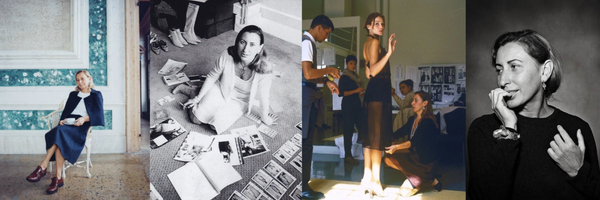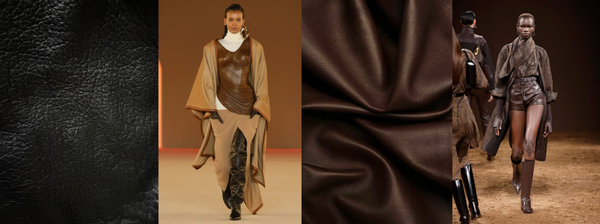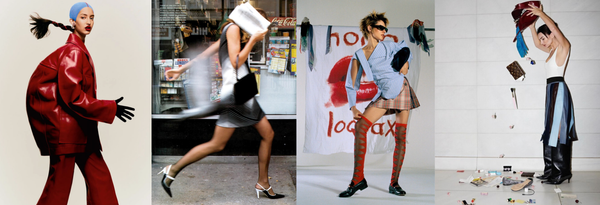
Alexander McQueen ( The Designer )

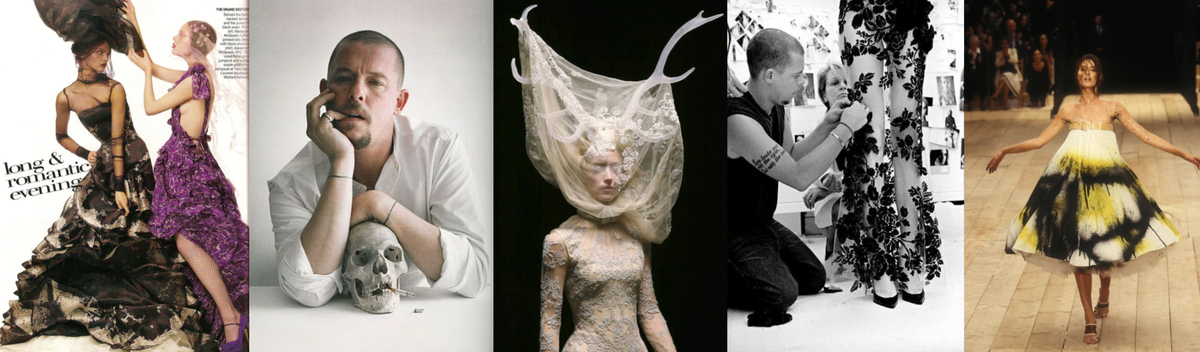
The Rebel Genius
Few designers have left as deep a mark on fashion history as Alexander McQueen, the British “enfant terrible” whose vision fused technical mastery, emotional intensity, and theatrical spectacle. More than a designer, McQueen was an artist who treated fashion as a form of storytelling. One capable of expressing beauty, violence, and vulnerability all at once.
The Rise of a Prodigy
Born Lee Alexander McQueen in London in 1969, he grew up in a modest family. His mother a teacher, his father a taxi driver. But his imagination was anything but ordinary. At sixteen, he left school to work as an apprentice on Savile Row, where he mastered the precision of British tailoring under prestigious houses like Anderson & Sheppard and Gieves & Hawkes.
This foundation gave McQueen an extraordinary technical rigor that would later contrast with his wild creativity. After working briefly in Milan for Romeo Gigli, he entered Central Saint Martins, one of London’s most respected fashion schools. His graduation collection immediately caught the eye of Isabella Blow, a British fashion editor who bought the entire line and encouraged him to use his middle name Alexander professionally. Blow became his mentor and muse, shaping the beginning of his meteoric rise.
Provocation as Poetry
McQueen’s early collections were provocative and fearless. His 1995 show Highland Rape shocked audiences with torn dresses, exposed flesh, and aggressive themes. A brutal yet poetic commentary on England’s historical domination of Scotland. Critics accused him of vulgarity, but others recognized his intent: McQueen used shock not for scandal, but as a means of exposing social wounds. “I want people to be afraid of the women I dress,” he once said, and he meant it as a statement of empowerment.
His shows were not simple fashion displays but emotional performances. Runways became stages where beauty and horror collided. Models trapped in glass cages, robots spray-painting dresses, holograms of Kate Moss dancing in thin air. Each show was an experience of awe, discomfort, and reflection, reminding audiences that fashion could provoke thought as well as admiration.
The Givenchy Years
In 1996, McQueen was appointed head designer at Givenchy, succeeding John Galliano. This move thrust him into the heart of haute couture, but also into a world of corporate luxury he often found suffocating. His first collections were poorly received. Too rebellious for a house defined by elegance and restraint. But McQueen soon learned to merge discipline with chaos. Over time, his designs at Givenchy grew bolder, featuring mythological and futuristic influences while maintaining impeccable craftsmanship.
Still, he longed for creative freedom. After leaving Givenchy in 2001, he focused fully on his own brand, supported by the Gucci Group (now Kering). There, his imagination flourished without limits.
McQueen’s Own Kingdom
Under his label, Alexander McQueen’s runway shows became spectacular emotional performances. From the haunting Voss (2001), which trapped models in a mirrored asylum, to Plato’s Atlantis (2009), a futuristic exploration of human evolution, McQueen used fashion to explore obsession, death, femininity, and transformation.
His approach was deeply narrative: each collection told a story. One season, he reimagined fallen pirates meeting tribal spirits; another, he paid tribute to Alfred Hitchcock’s Vertigo. For McQueen, fashion was not about trends but about emotion. It had to make people feel something. His craftsmanship remained exceptional, shaped by years of tailoring, yet every stitch was imbued with rebellion.
Darkness, Genius, and Legacy
Behind the spectacle, McQueen battled inner demons. Struggling with depression and addiction, he poured his pain into his work, crafting beauty from chaos. His death by suicide in February 2010, just days after his mother’s passing, marked one of fashion’s most tragic losses.
Yet his influence endures. His long-time assistant Sarah Burton continued his legacy with sensitivity, designing, among other masterpieces, Kate Middleton’s wedding dress, a symbol of continuity and grace. Today, designer Seán McGirrcarries the torch, seeking to reinterpret McQueen’s spirit for a new era.
My Thoughts
To me, Alexander McQueen represents the soul of fashion itself. Not just clothes, but emotion, conflict, and storytelling. His work reminds us that fashion can be art, protest, and confession all at once. I admire how he transformed pain into power and darkness into beauty.
I think what makes McQueen so timeless is his authenticity: he refused to follow trends or please anyone. He dared to expose the raw, unsettling side of humanity. In a world where fashion often feels polished and commercial, McQueen’s work remains a reminder that true creativity requires courage. The courage to shock, to dream, and to disturb.
As McQueen once said: “You’ve got to know the rules to break them. That’s what I’m here for… to demolish the rules, but to keep the tradition.” His life and art embody that paradox . Chaos with craftsmanship, rebellion with precision, and that’s what makes him unforgettable.
See you in the next one,
Xoxo
Eden
Recourses : Alexander_McQueen - alexander-mcqueen - alexander-mcqueen-lart-de-la-provocation_2132