Coco Chanel, The Woman Who Reinvented Elegance

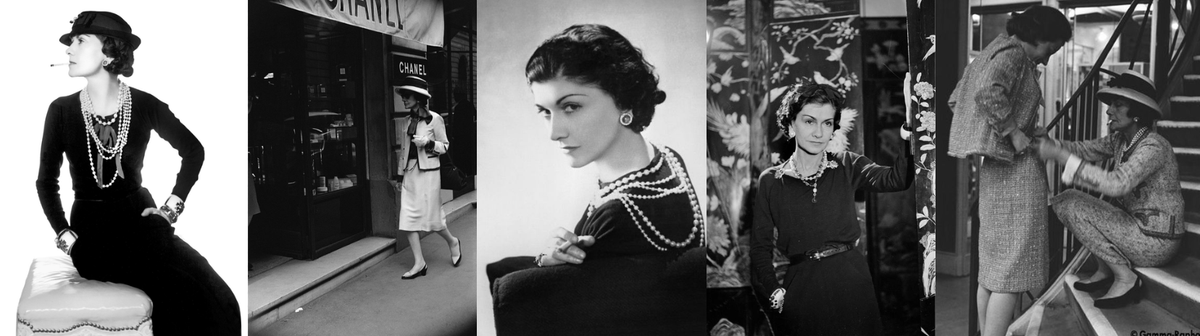
Very few names in fashion history hold as much weight as Coco Chanel. Today, her initials, the double C, are recognised worldwide as a symbol of luxury and timeless French elegance. But behind the myth exists a woman: bold, driven, controversial, and deeply influential.
Born Gabrielle Bonheur Chasnel in 1883, Chanel did not grow up surrounded by silk dresses or pearls. Instead, her early years were defined by poverty, abandonment, and resilience. Despite that, she became one of the rare designers whose influence still shapes how millions of women dress, almost a century after her creations first appeared.
Her story is not just about fashion; it is also about identity, freedom, power, and reinvention.
Origins & Meaning
Chanel’s childhood remains one of the most defining aspects of her life. When her mother died, her father, a traveling merchant, left her and her sisters in a convent-run orphanage. There, she learned sewing, discipline, and simplicity. The orphanage walls, made of stone and lit by minimal light, would later inspire her strict visual vocabulary: clean lines, monochrome tones, and functional beauty.
The teenage Gabrielle later worked in a tailor shop while performing in cafés, singing songs where the name “Coco”reportedly came from. Either a mispronunciation of “cocotte” (meaning elegant girl) or a song she often performed, "Qui qu’a vu Coco ?"
Her life changed when she met Étienne Balsan, then Arthur “Boy” Capel, two wealthy men who helped her navigate into elite Parisian circles. With Capel’s financial backing and emotional support, Chanel opened her first millinery shop in 1910 on Rue Cambon. Eventually, she expanded to Deauville and Biarritz, fashionable seaside towns, where her relaxed silhouettes gained attention.
Boy Capel’s tragic death in 1919 deeply affected her. Chanel once said: “It was the only time I cried.” It marked a turning point. Chanel became harder, more guarded, and even more determined to build an empire.
Designs, Innovations & Codes
Coco Chanel did not simply design clothes, she redesigned how women lived in them.
Before her, fashion followed rigid rules. Tight corsets, heavy fabrics, and decorative forms meant to restrict movement. Chanel observed the world differently. Women were entering the workforce, playing sports, riding bicycles, life was changing, and fashion needed to follow.
Her most important contributions include:
- Jersey Fabric Revolution
- Using jersey, previously male underwear material, was a radical act. Chanel turned it into soft, fluid clothing that followed the body instead of controlling it.
- Freedom from the Corset
- She helped popularise straight, relaxed cuts, making comfort stylish.
- The Little Black Dress (1926)
- Published in Vogue, the LBD became a symbol of chic understatement, the uniform of modern femininity.
- Chanel No. 5
- The first fragrance created with abstract notes rather than representing a single flower. Marilyn Monroe made it legendary when she famously said she wore nothing to bed except “five drops of Chanel No. 5.”
- The Chanel Suit (1954 Relaunch)
- Structured yet soft, inspired by menswear tailoring. It represented independence and confidence, a wardrobe for women entering the professional world.
- Costume Jewellery
- Chanel made pearls and jewellery symbols of elegance and daily wear, mixing luxury and accessibility.
Her design philosophy could be summarised in one idea:“Elegance means eliminating everything unnecessary.”
Cultural & Social Significance
Chanel’s influence goes far beyond clothing. She helped reshape feminine identity in the 20th century. Her designs aligned with new societal movements:
- Women gaining political rights
- Women entering professions
- Women demanding autonomy over their bodies and image
Even if she never publicly aligned herself with feminism, her work embodied feminist principles: freedom of movement, functional beauty, and self-determined style.
Her aesthetic shaped:
- Haute couture
- Luxury branding
- Fragrance marketing
- Fashion communication
- Pop culture
Chanel became a blueprint for the idea of the fashion designer as a cultural icon.
The Limits
However, her legacy is not without shadows.
During World War II, Chanel closed her fashion houses, except for perfume, and lived at the Ritz Paris, a hotel often used by Nazi officials. Her romantic and political associations with a German officer have been widely documented. Some biographers believe she attempted to take legal advantage of Nazi anti-Jewish policies to regain full ownership of Parfums Chanel, previously co-owned with the Jewish Wertheimer brothers.
While the story is still debated, it forces us to look at Chanel not only as a visionary but also as a deeply complex and morally ambiguous figure.
This doesn’t erase her contributions, but it adds necessary nuance.
Chanel Today
After leaving fashion in the 1930s, Chanel returned to revive her house in 1954, at age 71, a comeback rarely seen in fashion history. Critics were harsh, but women adored her new designs. Once again, she shaped the wardrobe of a new generation.
After her death in 1971, Chanel’s identity continued evolving. Under Karl Lagerfeld (1983–2019), the house modernised its codes. Tweed, pearls, chains, and camellias, transforming them into runway signatures. Today, under Matthieu Blazy, the brand continues Chanel’s balance of elegance, minimalism, and creative reinterpretation.
Chanel remains one of the most profitable luxury houses in the world, proving that her vision still resonates.
My Thoughts
Coco Chanel inspires me because she shows how fashion can be more than decoration, it can be a cultural statement. Her work represents elegance, intelligence, and restraint. She proves that simplicity, when done with intention, becomes power.
But admiring her also means recognizing the contradictions: ambition paired with controversy, innovation paired with questionable choices.
To me, she embodies a lesson:creativity can change the world, but history must be viewed honestly.
Chanel is not only a brand, she is a cultural phenomenon. And her influence continues to shape the way we dress, perceive femininity, and understand style.
Resources
Sites:
- Wikipédia: Coco_Chanel
- Chanel:gabrielle-chanel
- ELLE: Coco-Chanel
- Marie Claire: ,coco-chanel-l-elegance-insoumise,843070.asp
- Vogue: 20593
Pictures:
- Photo 1: 0dfd9e1e5f1d3d5158660618a96273c4.jpg
- Photo 2: 606a2d87d8c1e4e38d727ed160169612.jpg
- Photo 3: 8408c04b3644a6522979cf8876486b67.jpg
- Photo 4: 3cf7e2a0b541a5207fd5a9647f51aab9.jpg
- Photo 5: 4d3b4cfed7923d83d0f9389eea87c014.jpg