Fur, A Complex Fashion Legacy

Fur is one of the oldest forms of clothing known to humanity. For more than 120,000 years, humans have used animal pelts as protection against harsh climates, making fur not just a material, but a key survival tool. Over time, however, fur evolved far beyond functionality, becoming a symbol of power, luxury, and prestige. From ancient Egyptian royalty to Hollywood icons of the 1950s, fur has continuously reflected social hierarchies, aesthetics, and cultural values.
Today, fur sits at the center of a heated debate, admired for its craftsmanship and durability, yet criticised for its ethical and environmental implications. The conversation around fur and faux fur is now more relevant than ever.
Origins & Meaning
Historically, fur was used by early humans and Neanderthals to survive cold climates. Later, it developed into a cultural symbol. In medieval Europe, strict sumptuary laws determined which social classes could wear specific types of fur. Rare furs like ermine, leopard, or chinchilla were reserved for nobility, while fox and goat were assigned to lower classes.
During the 17th and 18th centuries, fur became a major trade commodity, especially in North America, where beaver pelts were in high demand to produce hats and military accessories.
In the 19th and 20th centuries, fur shifted again, from inner lining to outer luxury fashion statement. Full-length mink, sable, and fox coats became synonymous with glamour, femininity, and wealth. By the 1950s and 1960s, almost every Hollywood star owned a fur coat.
Today, fur remains part of cultural heritage in colder regions, especially among Inuit communities and in countries like Russia, Finland, and Japan. However, its meaning has changed globally: instead of status, fur now represents a moral and environmental debate.
How Fur and Faux Fur Are Made
Real Fur : Traditional fur production includes trapping or farming animals, curing the skins, and processing them to prevent decay. The fur is then cut, assembled, and sewn into garments with precise craftsmanship. It can be dyed, sheared, or shaped depending on the desired aesthetic. Fur is known for its superior insulation, softness, durability, and natural thermal performance.
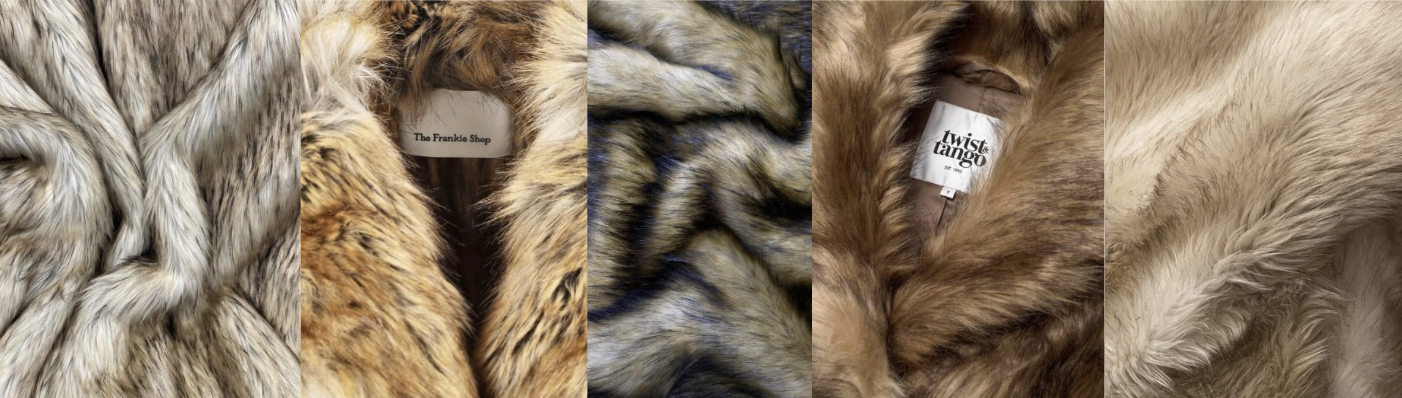
Faux Fur : Faux fur is created from synthetic fibres such as acrylic, polyester, or modacrylic, woven onto a textile backing. Modern faux fur technology aims to mimic the softness, density, and shine of real fur. Sometimes so convincingly that it requires testing (odor test, pin test, fiber inspection) to tell them apart. Faux fur varies in pile length, weight, texture, and sheen, making it versatile and accessible in fashion and interior design.
Cultural, Ethical & Environmental Significance
Fur has always carried symbolic meaning, from status and fashion to cultural identity. However, modern awareness has exposed its darker side. Animal-rights activism grew in the late 20th century, especially during the 1980s, pushing for bans on fur farming and stricter ethical consideration.
Many luxury houses such as Gucci, Stella McCartney, Givenchy, and Calvin Klein have renounced fur. Meanwhile, others, notably Hermès, Dior, and Fendi, continue to work with natural fur, arguing for tradition, craftsmanship, and sustainability.
The debate isn’t only ethical, it’s environmental. While natural fur comes from animals, it requires intensive farming, chemical tanning, and energy-heavy processing, resulting in high CO₂ emissions. Reports have demonstrated that producing one mink coat can emit up to seven times more CO₂ than a faux fur coat and requires significantly more energy.
Today’s Evolution
Today’s fashion landscape is divided. Real fur production has dramatically decreased, and many governments, including the UK, Netherlands, and various EU nations, have banned fur farming. Meanwhile, faux fur dominates runways and retail, evolving into more sustainable versions using recycled fibres or laboratory-grown textiles.
Scientists and designers are also experimenting with bio-fabricated fur, a cruelty-free material grown similarly to lab-grown leather or diamonds, offering a futuristic, ethical alternative to both real and synthetic fur.
The Necessary Reality Check
Both real and faux fur have ethical and environmental challenges. Real fur involves the use of animals and intensive farming practices, which raises serious ethical concerns despite its natural insulation, durability, and biodegradability. Faux fur, on the other hand, is cruelty-free, but it is often made from synthetic, non-biodegradable fibers that can contribute to microplastic pollution. Real fur provides superior warmth and long-lasting quality, while faux fur may not be as durable or insulating. Both materials have environmental impacts: real fur’s production is energy-intensive and associated with significant CO₂ emissions, whereas faux fur requires synthetic manufacturing processes that, while less energy-consuming, still involve the use of petroleum-based materials. Understanding these limitations is essential for making informed choices about fashion, ethics, and sustainability.
My Thoughts
Fur is fascinating because it holds history, survival, culture, prestige, and controversy all at once. Learning about it helped me understand how fashion is never just aesthetic, it reflects values, ethics, and identity.
While the idea of real fur carries undeniable craftsmanship and legacy, it also brings emotional and ethical discomfort. Faux fur, although not perfect, feels like the direction fashion must continue exploring. Smarter, more responsible, and aligned with the world we’re shaping.
For me, fashion should reflect creativity but also responsibility. The future of fur will not be about copying the past, but redefining it.
See you in the next one,
Xoxo
Eden
Resources
Sites:
- Wikipedia : Fur_clothing
- Fabriclore: information-about-fur-faux-fabric
- Ecopel: article-03---the-truth-about-faux-fur---sustainability.html
- Monday Merch: faux-fur
Pictures:
- Photo 1: 4e8709bdbbcd8ea744ab46adb9bca386.jpg
- Photo 2: a47f168a06918e5b5d7606b4c8b6d904.jpg
- Photo 3: fea60b7b11c1bf2b698662e505699a5c.jpg
- Photo 4: 02834f0e70749e5e57dc3a898346229f.jpg
- Photo 5: 0055daf6fff771bfa93a9917bb3a9021.jpg