How AI Is Changing Design and Retail

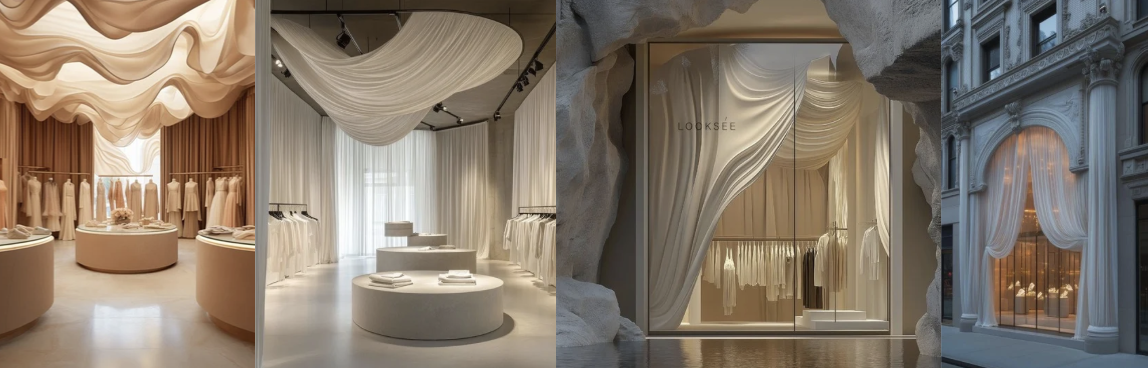
Retail is undergoing a profound transformation. Artificial intelligence is no longer limited to online recommendations or logistics. It is now reshaping store design, visual merchandising, and customer experience.What was once driven mainly by intuition, aesthetic sensibility, and experience is now supported by data, algorithms, and real-time analysis.
Stores are becoming intelligent environments capable of adapting to customers’ behaviors, preferences, and even emotions. This evolution raises an essential question: is AI enhancing creativity in retail design, or slowly replacing it?
From Static Stores to Intelligent Spaces
Traditional retail spaces were fixed and predictable. AI has changed that by allowing stores to become dynamic and responsive.
Thanks to cameras, sensors, and AI-powered analytics, retail spaces can now:
- Track customer movement inside the store
- Measure time spent in specific areas
- Identify which products attract attention
- Optimize layouts in real time
These insights help brands reorganise product placement, adjust circulation paths, and improve conversion rates. Retail spaces are no longer passive, they learn and evolve with each visitor.
AI and Hyper-Personalisation in Retail Design
Personalisation has always been a retail goal, but AI makes it scalable and precise.
AI-driven systems can adapt:
- Displays and product selections
- Lighting, colors, and atmosphere
- Music and digital content
In advanced cases, AI can even analyse emotional responses through facial recognition or biometric signals, allowing stores to adjust their environment to the customer’s mood.
This creates a highly immersive experience, but also introduces serious ethical concerns.
Real-World Examples of AI in Retail
- Uniqlo – UMood
Uniqlo’s UMood project combined AI and neuroscience to analyse customers’ emotional states. Participants wore a neuro-headset while watching videos, and AI interpreted their brain responses to recommend t-shirts matching their mood.
Although used through kiosks, this project introduced a powerful concept: emotion-driven retail design.In the future, entire stores could adapt their displays, lighting, and ambiance based on collective emotional data.
UMood generated massive global attention and positioned Uniqlo as a pioneer in experiential retail.
- Nike – AI-Powered Personalisation
Nike uses AI in multiple ways, notably through Nike Fit, an augmented reality tool that scans customers’ feet to recommend the perfect shoe size. This improves satisfaction and significantly reduces returns.
Nike also enables real-time product customization, allowing customers to design sneakers in-store using AI, object tracking, and projections.This approach benefits both customers and brands by offering unique products while collecting valuable design insights.
Beyond Design
AI impacts more than store aesthetics. It is transforming:
- Inventory management and demand forecasting
- Personalized marketing and CRM systems
- AI chatbots and conversational support
- Visual curation through image-based search
- Dynamic pricing and fraud detection
Retailers now rely on AI to connect online and offline experiences seamlessly, creating a unified customer journey.
The Limits and Risks of AI in Retail Design
Despite its advantages, AI raises important concerns.
- Privacy and Surveillance
- Emotion detection, facial recognition, and behavioural tracking pose major privacy risks. Customers may not always be aware of how much data is collected or how it is used.
- Loss of Human Creativity
- There is a risk that over-reliance on AI could lead to standardised, data-driven aesthetics, reducing experimentation and emotional storytelling in retail design.
- Ethical and Data Bias Issues
- AI systems are only as good as the data they are trained on. Biased or incomplete data can reinforce inequalities and misrepresent consumer behavior.
These limits highlight the need for ethical frameworks, transparency, and human oversight.
My Thought
I believe AI should not replace designers or visual merchandisers, it should empower them. AI is a powerful tool for optimisation and personalisation, but creativity, cultural sensitivity, and emotional storytelling remain deeply human skills.
The future of retail design, in my opinion, lies in collaboration between human intuition and artificial intelligence. The most successful spaces will be those that use AI intelligently while preserving authenticity, creativity, and respect for consumers.
Resources
Websites
- CAAD: retail-design-and-ai-how-stores-adapt-in-real-time
- Hitachi: ai-in-retail
- Forbs : how-ai-is-revolutionizing-retail-exclusive-insights-from-an-industry-expert
Photos