Indian Fashion: History, Power, and Limits

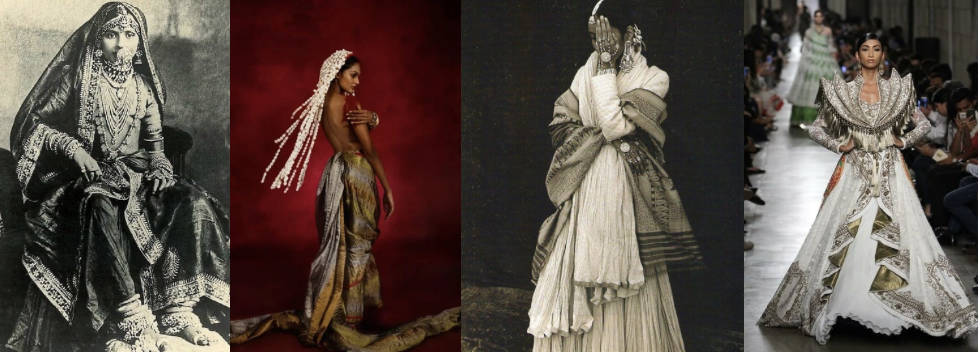
Indian fashion is not simply a matter of clothing, it is a visual archive of history, identity, resistance, spirituality, and social hierarchy. From ancient textiles to contemporary runways, Indian fashion tells stories shaped by empire, craftsmanship, colonisation, globalisation, and cultural pride. Understanding Indian fashion means understanding India itself, its diversity, contradictions, and creative resilience.
This article explores Indian fashion through history, symbolism, global influence, and its limits.
Ancient Roots: Clothing as Identity and Spiritual Expression
Indian fashion dates back thousands of years, deeply connected to climate, religion, and social structure. Ancient garments such as the sari, dhoti, and angavastram were not tailored in the Western sense but draped, allowing freedom of movement and adaptability to India’s diverse climates. Textiles like cotton and silk were developed early, with India becoming one of the world’s most important textile producers.
Clothing also carried spiritual meaning. Colors, fabrics, and draping styles often symbolized purity, devotion, or social role. For example, white traditionally represented mourning or spiritual detachment, while saffron was associated with asceticism and sacred life. Fashion was never just decorative. It was symbolic and functional.
Textiles, Craft, and Regional Diversity
India’s fashion identity is inseparable from its regional crafts. Each region developed distinct textile traditions: Banarasi silk from Uttar Pradesh, Kanchipuram silk from Tamil Nadu, Ikat weaving from Odisha, block printing from Rajasthan, and intricate embroidery such as Zardozi and Phulkari.
These crafts were historically passed down through generations, often within specific communities. Textiles functioned as markers of geography, caste, and occasion. This diversity makes Indian fashion one of the richest textile ecosystems in the world, where clothing acts as a cultural map.
Colonialism and the Disruption of Indian Fashion
British colonisation had a devastating impact on Indian fashion and textile industries. India, once a global leader in textile production, was forced into becoming a raw material supplier for British mills. Indigenous weavers lost livelihoods as handmade fabrics were replaced by industrial imports.
Western clothing was imposed as a symbol of modernity and power, while traditional dress was often portrayed as backward. This created long-lasting hierarchies where Western silhouettes were associated with progress and Indian garments with tradition or limitation. Fashion became a political tool, reinforcing colonial dominance.
Fashion as Resistance and National Identity
In response, clothing became a form of resistance. Mahatma Gandhi famously promoted khadi, a hand-spun, handwoven fabric, as a symbol of self-reliance and anti-colonial protest. Wearing khadi was a political act, reclaiming dignity through indigenous fashion.
Post-independence, Indian designers began reasserting traditional textiles and silhouettes while redefining them for a modern nation. Fashion became a way to rebuild cultural confidence and reclaim narratives erased during colonisation.
Contemporary Indian Fashion and Global Influence
Today, Indian fashion exists at the intersection of tradition and global modernity. Designers like Sabyasachi, Manish Malhotra, Anamika Khanna, and Rahul Mishra reinterpret heritage crafts for international audiences. Indian embroidery, draping, and color palettes influence global fashion houses and red carpets.
However, globalisation has also simplified Indian fashion into stereotypes, often reduced to exoticism, weddings, or spectacle. While global visibility has increased, nuance is frequently lost.
Limits, Criticism, and Cultural Appropriation
Despite its richness, Indian fashion faces significant challenges. Many artisans remain underpaid and invisible while luxury brands profit from their labor. Traditional crafts are sometimes stripped of context and sold as trends without acknowledgment.
Cultural appropriation is another major issue. Western brands often borrow Indian motifs, textiles, or silhouettes without credit or compensation. Additionally, caste and gender hierarchies still influence who is represented and celebrated within the fashion industry.
Sustainability is also a concern. While traditional Indian fashion was inherently sustainable, fast fashion and mass production now threaten both the environment and artisanal communities.
Indian Fashion as Living Storytelling
Indian fashion is not frozen in the past. It is a living, evolving form of storytelling. Each garment carries layers of memory: personal, political, spiritual, and social. Fashion continues to reflect changing identities, diasporic experiences, and generational shifts.
Understanding Indian fashion means listening to the stories embedded in fabric, technique, and labor.
My Thought
What moves me most about Indian fashion is its ability to survive disruption while remaining deeply expressive. It carries pain, colonial erasure, exploitation, inequality, but also resilience and beauty. Indian fashion reminds us that clothing can be an archive, a protest, and a form of memory.
However, admiration must come with responsibility. Celebrating Indian fashion without acknowledging its makers, its politics, and its limits risks repeating patterns of exploitation. For me, true appreciation means respect, credit, and care.
See you in the next one,
Xoxo
Eden
Resources
Sites:
- Wikipedia: https://en.wikipedia.org/wiki/Indian_clothing
- House of Tarela : the-evolution-of-indian-wear-a-historical-perspective
- Fabricoz: how-indian-dresses-have-evolved-throughout-the-centuries
- Pure Elegance: the-rich-history-of-indian-fashion
Pictures: