Martin Margiela

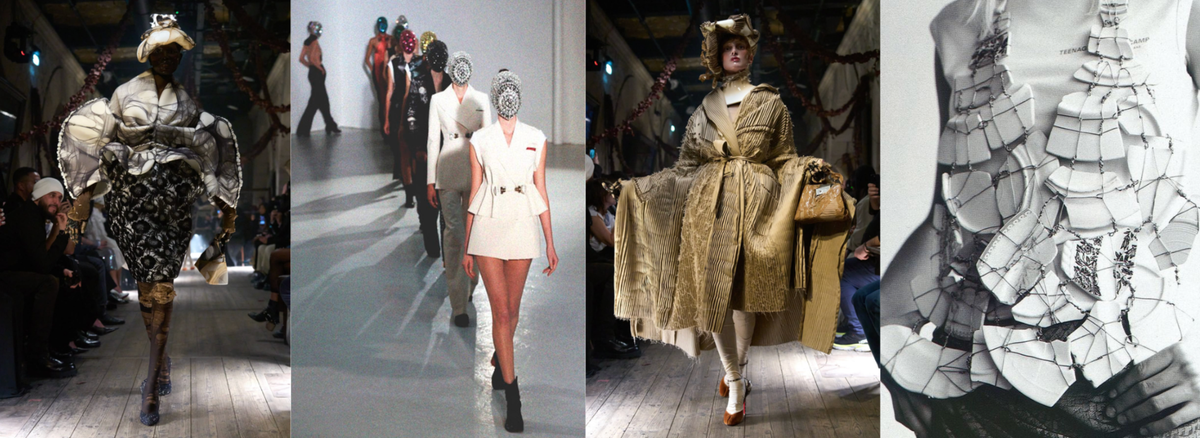
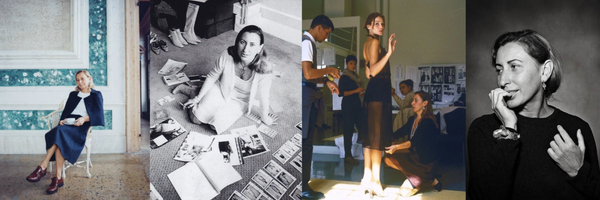
Martin Margiela (born April 9, 1957, in Genk, Belgium) is one of the most influential fashion designers of the late 20th and early 21st centuries. Known for his radical deconstruction, oversized silhouettes, and upcycled aesthetic, he reshaped the language of contemporary fashion.
As a child, Margiela became fascinated with clothing transformation. Watching designers like André Courrèges and Paco Rabanne on television in the 1960s sparked his imagination. As a teenager, he styled himself using second-hand clothes found at flea markets an early sign of his future commitment to recycling and reinterpretation.
He studied fashion at the Royal Academy of Fine Arts in Antwerp, graduating in 1979, just before the emergence of the avant-garde collective known as the Antwerp Six. Though closely linked to that movement, Margiela always remained more discreet and conceptual.
The Gaultier Years
In 1984, Margiela moved to Paris to work as an assistant to Jean Paul Gaultier until 1987. Rather than adopting Gaultier’s flamboyant theatricality, Margiela observed silently, refining his technical expertise while developing a critical view of the fashion system.
This period allowed him to understand the spectacle of fashion — something he would later challenge radically.
The Birth of Maison Margiela 1988
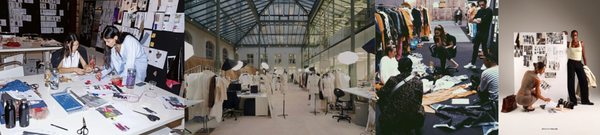
In 1988, together with Jenny Meirens, he founded his own label: Maison Margiela.
From the start, everything was different:
- No interviews.
- No photographs of the designer.
- No final bow at fashion shows.
- Media communication only via fax or email.
- A white label held by four visible white stitches.
- Number coding (0–23) instead of logos.
His Spring/Summer 1990 show, held in a derelict playground in a North African neighborhood outside Paris, shocked the industry. Models stumbled deliberately. Sleeves were ripped. Hems were frayed. Local children sat in the front row.
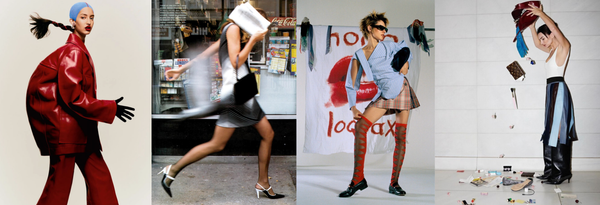
Margiela was rejecting glamour and consumerism. He embraced:
- Deconstruction
- Visible seams
- Recycled materials
- Oversized silhouettes
- Masks and hidden faces
- “Tabi” boots inspired by Japanese split-toe socks
He turned gloves into tops, seat covers into dresses, army socks into couture pieces. His philosophy: nothing is lost, everything transforms.
Hermès 1997–2003
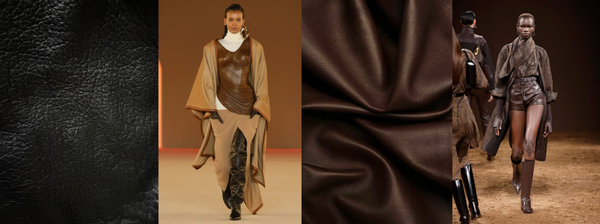
In 1997, Margiela surprised the industry by becoming creative director of women’s wear at Hermès.
At first, critics doubted the match between an avant-garde designer and a conservative luxury house. Yet Margiela introduced a timeless wardrobe inspired by 1920s sportswear. His Hermès collections were discreet, elegant, and focused on quality rather than spectacle.
Notable contributions included:
- Modular coats with removable collars
- Jackets that roll into bags
- The double-loop strap design of the Cape Cod watch
- The diamond-shaped Losange scarf
Rather than shocking, he refined. He proved that radical thinking could exist inside tradition.
He stepped down in 2003 to focus on his own label.
Anonymity as a Statement
Margiela’s anonymity was revolutionary.
He refused the cult of personality that dominated fashion. While designers became celebrities, he erased himself. His boutiques had no signage. Staff wore white lab coats. Shows were held in parking lots, metro stations, or abandoned warehouses.
The attention had to remain on the garment, not the designer.
However, this radical distance also had limits:
- His silence sometimes created mystery over clarity.
- The lack of communication made his work less accessible to wider audiences.
- Some critics argued that extreme conceptualism could feel detached from everyday wearability.
Yet this tension became part of his legend.
Departure and Transition
In 2002, Maison Margiela was acquired by the OTB Group. By 2009, Margiela officially left the house.
In 2014, John Galliano was appointed creative director, marking a visible shift from anonymity to theatricality.
Margiela had disappeared, but his influence remained everywhere.
From Fashion to Contemporary Art
After leaving fashion, Margiela turned fully toward art.
In 2021, he presented his first solo exhibition with Lafayette Anticipations in Paris. The works included:
- Silicon spheres covered in human hair
- Large-scale paintings of dust particles
- Blank and unfinished spaces
Themes remained consistent: absence, transformation, anonymity, time.
Even in art, Margiela avoids self-promotion. The work speaks.
Influence & Legacy
Today, Margiela is considered one of the most influential designers of recent history. His impact can be seen in:
- Deconstruction as a mainstream aesthetic
- Oversized tailoring
- Sustainable and upcycled fashion movements
- The intellectualization of fashion
He proved that fashion could be conceptual, critical, and political.
Limits & Criticism
- Even visionary designers have limits:
- Some collections were considered too intellectual or inaccessible.
- Commercial sustainability was sometimes challenging.
- His anonymity, while powerful, made brand storytelling difficult.
- After his departure, the house faced identity tensions between heritage and reinvention.
Yet these limits are also what made his practice radical.
My Thought
Personally, I find Martin Margiela fascinating because he proves that silence can be louder than noise. In a world where designers fight for visibility, he chose invisibility. That feels almost political.
What inspires me most is his way of transforming forgotten objects into art. It shows that creativity is not about having more, it’s about seeing differently.
Margiela didn’t just design clothes. He changed how we think about fashion itself.
See you in the next one,
Eden
Resources:
- Wikipedia: Martin_Margiela
- Elle: Martin-Margiela
- palais de la porte dorée: martin-margiela
- Numéro: martin-margiela
Photos: