Rei Kawakubo: Redefining Fashion Through the In-Between

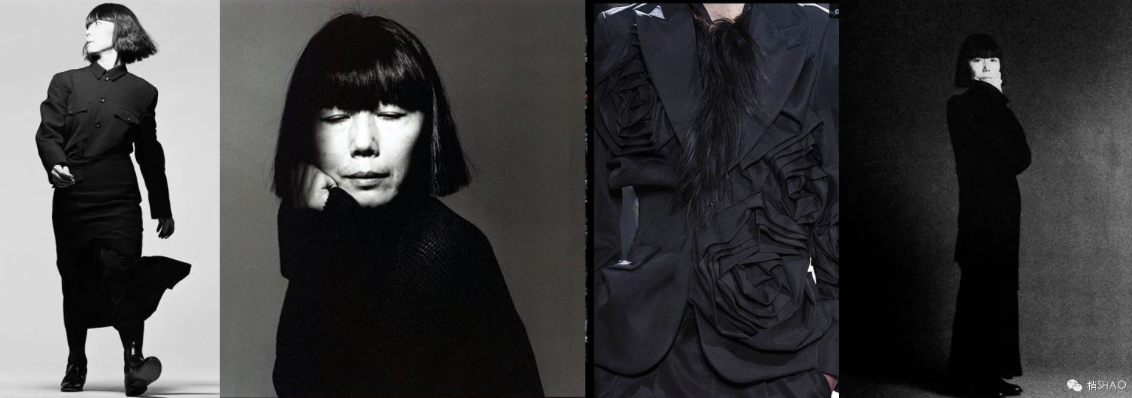
Rei Kawakubo is not simply a fashion designer. She is a theorist of form, a cultural disruptor, and one of the most radical thinkers fashion has ever produced. As the founder of Comme des Garçons and Dover Street Market, she has consistently refused to treat clothing as decoration. Instead, she approaches fashion as a language capable of questioning beauty, gender, identity, capitalism, and even the human body itself. Self-taught, media-shy, and uncompromising, Kawakubo has built an empire while rejecting nearly every convention of the industry. For more than fifty years, she has operated in what she calls the “in-between”, between art and fashion, masculine and feminine, wearable and unwearable, commerce and refusal.
Early Life, Education & Intellectual Foundations
Rei Kawakubo was born on October 11, 1942, in Tokyo, in a Japan still marked by war, loss, and reconstruction. This historical context deeply influenced her worldview, particularly her rejection of excess, glamour, and Western ideals of beauty. She studied fine arts and aesthetics at Keio University, graduating in 1964. Crucially, she never studied fashion design, pattern-making, or tailoring in a traditional sense.
After university, Kawakubo joined Asahi Kasei, a textile company, working in advertising. Rather than learning how garments should be made, she learned how images, materials, and ideas communicate meaning. When she couldn’t find clothing that aligned with her visual concepts for advertising shoots, she began designing garments herself. This origin is key: Kawakubo did not enter fashion to beautify the body, but to solve conceptual problems.
By 1967, she became a freelance stylist, and in 1969, she began selling her designs under the name Comme des Garçons, meaning “like boys.” From the start, the brand rejected traditional femininity and embraced ambiguity, strength, and independence.
Building Comme des Garçons: Growth Without Compromise
Comme des Garçons was officially incorporated in 1973, and Kawakubo opened her first boutique in Tokyo in 1975. Unlike many designers who scale creatively only after commercial success, Kawakubo maintained her radical vision even as the brand expanded. In 1978, she introduced Homme Comme des Garçons, a menswear line that blurred gender boundaries and challenged conventional tailoring.
By the end of the 1970s, CDG had become a cultural phenomenon in Japan, with 150 stores, 80 employees, and annual revenues of $30 million. Kawakubo’s followers, dressed almost exclusively in black, oversized garments, became known as “The Crows”. Rather than denying this subculture, she allowed it to exist organically. Fashion as identity rather than trend.
Paris 1981: The Shock That Changed Fashion History
Kawakubo’s Paris debut in 1981, alongside Yohji Yamamoto, remains one of the most important moments in modern fashion. At a time when Paris celebrated glamour, luxury, and sensual silhouettes, Kawakubo presented collections dominated by black, asymmetry, torn fabrics, raw seams, and voluminous shapes that deliberately obscured the body.
Western critics reacted with hostility. Her clothes were labeled “Hiroshima chic,” “post-atomic fashion,” and “bag lady style.” These descriptions revealed not only misunderstanding, but also deep discomfort with clothing that refused beauty, sex appeal, and polish.
Limits and ethical issues: These terms were culturally insensitive and devalued Japanese trauma. Yet they also reveal how radically Kawakubo destabilized Western fashion norms. What critics saw as destruction, Kawakubo saw as liberation.
Anti-Fashion as a Radical Philosophy
Kawakubo’s work is often described as anti-fashion, but this does not mean anti-clothing. Instead, it is a rejection of trend cycles, nostalgia, and fashion as entertainment. She designs from concepts, often beginning with abstract questions rather than references.
Her influential 1982 “Destroy” collection featured oversized knitwear riddled with holes, challenging ideas of luxury, perfection, and value. These garments appeared damaged, unfinished, and uncomfortable, a direct opposition to the polished glamour dominating the runway.
Kawakubo famously stated that she wanted to “start from zero, from nothing”, erasing historical references in order to create forms that had never existed before.
Rethinking the Body: Gender, Form & Power
One of Kawakubo’s most important contributions is her radical rethinking of the human body. She rejects Western beauty ideals that prioritize slimness, symmetry, youth, and sexual availability. Instead, her designs often obscure, distort, or completely redefine bodily form.
Her Spring/Summer 1997 collection, “Body Meets Dress, Dress Meets Body,” featured padded protrusions placed in unconventional areas. Critics dubbed it the “lumps and bumps” or “tumor” collection, accusing Kawakubo of disfiguring women.
Criticism: Many argued the garments were unwearable and even offensive.
Counterpoint: Kawakubo used distortion as resistance, refusing to sexualize the female body and challenging binary gender norms. Her clothes create bodies that exist outside desirability, consumption, and control.
Feminism Without Labels
Although often labeled a feminist designer, Kawakubo has consistently rejected categorization. She has stated that she does not design as a woman. Yet her work profoundly reshaped how women are represented in fashion.
She refused to design stilettos, avoided hyper-sexualized silhouettes, and created garments prioritizing mobility, autonomy, and strength. Her clothes are not meant to attract, they are meant to exist.
In this sense, her feminism is not symbolic but structural: embedded in how bodies move, occupy space, and resist being consumed.
A Total Vision: Image, Space & Environment
For Kawakubo, fashion is a total ecosystem. She controls graphic design, advertising, store interiors, runway staging, and even how collections are photographed and archived.
She launched the experimental magazine Six (1988–1991), a biannual publication with almost no text. Acting as both fashion journal and contemporary art object, Six reflected her belief that images can communicate beyond language.
Her Tokyo Aoyama flagship store, with its sloping glass façade, further demonstrates her architectural approach to fashion retail.
Commerce, Contradiction & Dover Street Market
Despite her anti-fashion stance, Kawakubo built a business generating hundreds of millions of dollars annually. She launched Comme des Garçons Parfums in 1994, including experimental scents like Odeur 53, described as an “anti-perfume.”
In 2004, she co-founded Dover Street Market with Adrian Joffe. Designed as “beautiful chaos,” DSM blurred the boundaries between boutique, gallery, and concept store. It also became a launchpad for emerging designers.
Limit: While radical, DSM and CDG remain largely inaccessible due to pricing, raising questions about elitism within conceptual fashion.
Influence, Recognition & Cultural Legacy
Rei Kawakubo has influenced designers such as Alexander McQueen, Martin Margiela, Ann Demeulemeester, Helmut Lang, Viktor & Rolf, and many others. Under the CDG umbrella, she launched the careers of Junya Watanabe, Tao Kurihara, and Kei Ninomiya, creating a rare ecosystem of sustained creativity.
In 2017, the Metropolitan Museum of Art honored her with “Rei Kawakubo / Comme des Garçons: Art of the In-Between,” making her only the second living designer to receive such recognition. The exhibition explored nine conceptual dualities, reinforcing her position as a cultural thinker rather than a trend-driven designer.
Limits, Criticism & Ongoing Debate
Kawakubo’s work is often criticized for intellectual opacity, limited wearability, and extreme pricing. Some argue her designs prioritize concept over the lived experience of the wearer.
Yet these limits are inseparable from her philosophy. Kawakubo does not aim to comfort, she aims to question. Her work exists not to please, but to provoke reflection.
My Thought
What moves me most about Rei Kawakubo is her absolute refusal to dilute her vision. In an industry driven by trends, algorithms, and constant visibility, she works quietly, slowly, and with unwavering integrity. Her work reminds me that fashion can be intellectual, uncomfortable, and deeply political, and that sometimes discomfort is necessary to push culture forward.
See you in the next one,
Xoxo
Eden
Resources
Sites:
- Wikipedia: Rei_Kawakubo
- Business of Fashion: rei-kawakubo
- Britannica: Rei-Kawakubo
Pictures: