Saint Laurent Show

The Birth of a Revolution
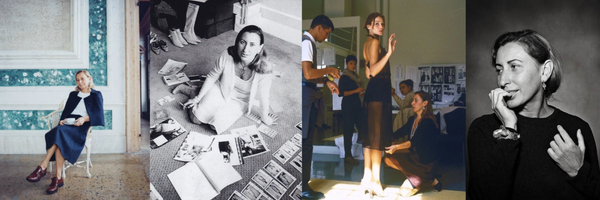
“Chanel freed women, and I empowered them,” declared Yves Saint Laurent. This single line encapsulates one of fashion’s most profound shifts. The passage from liberation to empowerment. When he founded his house in 1961, Saint Laurent offered women not just clothes, but a new attitude. His designs, the Mondrian dress, the safari jacket or Le Smoking, reshaped femininity with confidence, sensuality, and intellect. He transformed dressing into a language of self-expression, reflecting the political and sexual revolutions of his time.
Origins & Meaning
Yves Saint Laurent’s career began in drama. Dismissed from Christian Dior at just 25, he responded not with retreat but with defiance. With his partner Pierre Bergé, he founded his own fashion house, and the legend was born. From the beginning, Saint Laurent’s universe was infused with rebellion and culture. He drew inspiration from Marrakech’s vibrant colors, Russian folklore, African tribal art, and the world’s countercultures. He didn’t just design clothes, he designed attitudes.
His creations embodied contradictions: strict tailoring and sensual transparency, masculine lines and feminine delicacy. In 1966, Le Smoking tuxedo redefined gender codes, giving women the authority of a man’s suit without sacrificing allure. It was elegance turned into a statement. Power made wearable.
The Art of Transformation
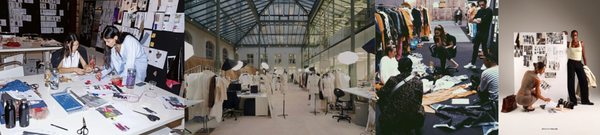
Saint Laurent’s genius lay in his ability to transform the ordinary into the extraordinary. He elevated humble garments such as peasant blouses, military trench coats, or safari jackets into couture masterpieces. Each piece was meticulously constructed, balancing architectural structure with fluidity. His designs spoke of freedom, but behind that ease was precision: perfect shoulders, controlled volumes, and sharp silhouettes.
His Rive Gauche line, launched in 1966, revolutionized fashion by making luxury accessible. It was the first ready-to-wear boutique by a major couturier. A democratic gesture that reflected Saint Laurent’s belief that style should belong to everyone. This vision blurred the boundaries between couture and everyday life, between exclusivity and modernity.
Power, Provocation, and Liberation
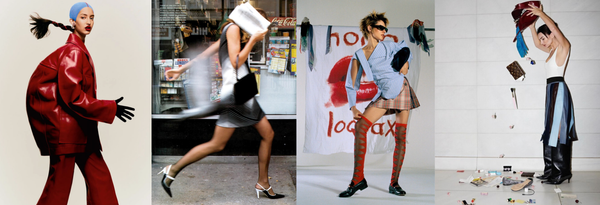
More than a designer, Yves Saint Laurent was a cultural force. His heroines were not passive beauties but modern women. Bold, intellectual, and free. His creations dressed icons like Catherine Deneuve in Belle de Jour, where fashion became part of the character’s psychological narrative: restraint on the surface, desire beneath.
Saint Laurent also shattered taboos. In 1971, he posed nude to advertise his men’s perfume Pour Homme. A scandal that redefined how fashion could express masculinity and sexuality. Later, his fragrance Opium pushed the boundaries even further, turning controversy into allure.
Through it all, he shaped what we now call the empowered woman: elegant but daring, feminine yet self-possessed. His vision extended beyond fabric. It was about identity.
Legacy Reimagined
Today, Anthony Vaccarello carries that torch with magnetic precision. Appointed creative director in 2016, the Belgian designer has mastered the art of translating Saint Laurent’s codes into the 21st century. His women are sculptural, confident, and unapologetically sensual. A tribute to the founder’s balance between structure and seduction.
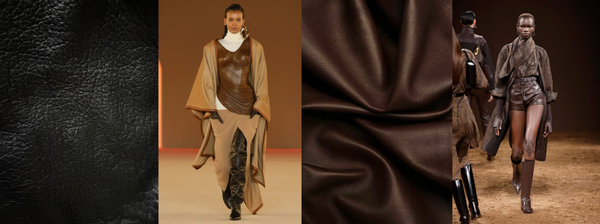
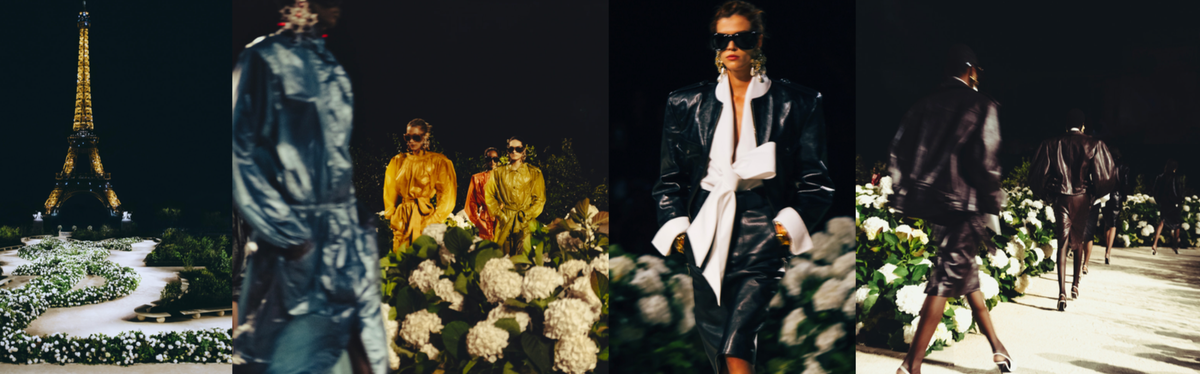
The Spring/Summer 2026 show, set at the foot of the Eiffel Tower, perfectly embodied this continuity. Against a backdrop of white hydrangeas and Parisian lights, Vaccarello presented a collection that merged toughness and delicacy. Leather armors with 1980s shoulders echoed Robert Mapplethorpe’s raw eroticism, while fluid parachute fabrics recalled the freedom of the Rive Gauche spirit. The contrast was striking: power and vulnerability intertwined under the Parisian sky.
This wasn’t nostalgia, it was renewal. Vaccarello’s Saint Laurent speaks to today’s women, who, like those of the 1960s, are navigating questions of autonomy, visibility, and desire. His collections resonate deeply in an era of redefined femininity.
My Thoughts
Watching Saint Laurent evolve through time feels like witnessing fashion’s own coming of age. Yves Saint Laurent taught me that elegance can be radical. That beauty can exist in defiance. I was amazed by the scenography of Vaccarello’s recent show: the gleaming marble floor, the powerful silhouettes moving like sculptures under the Eiffel Tower’s golden lights. There was something cinematic, almost sacred, about it. A conversation between past and present.
The pieces themselves were breathtaking: tailored jackets with sculptural shoulders, delicate blouses knotted with oversized lavallières, and gowns that seemed to float like armor made of air. I was struck by the duality of it all. Softness wrapped in strength. It reminded me that true style isn’t about pleasing others, but about asserting who you are.
Learning about Yves Saint Laurent and his legacy made me realize how fashion can embody emotion, rebellion, and art all at once. Behind every seam lies a story of liberation, risk, and vision. And that, to me, is what makes Saint Laurent timeless.
See you in the next one,
Xoxo
Eden
Recourses : saint-laurent - diaporama-4176099-images-rock-glam-stars-saint-laurent-fait-show-paris - le-defile-saint-laurent-printemps-ete-2026