The History of Fashion Week

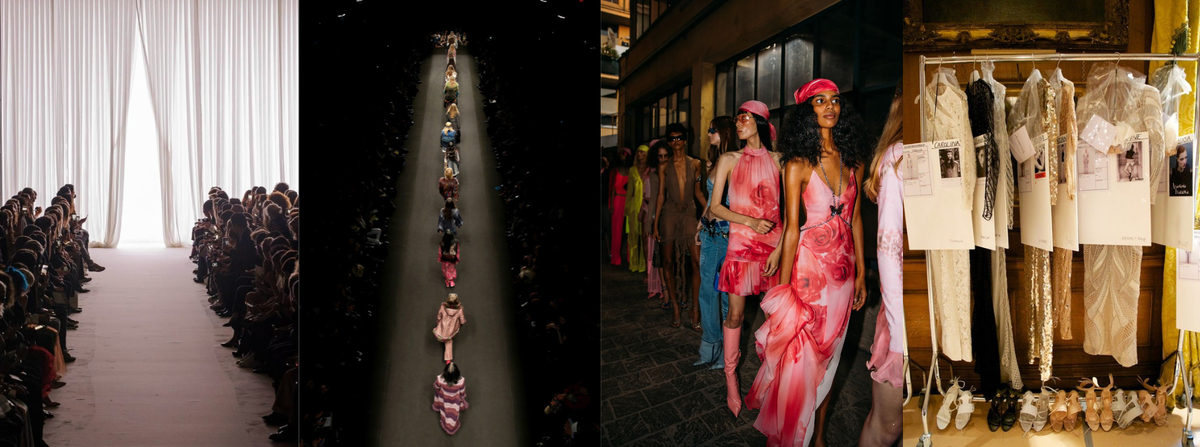
Fashion Week is one of the most powerful events in the global fashion industry. What began as small private showings for elite clients has evolved into a worldwide cultural spectacle shaping trends, business, media, and creativity. This article explores Fashion Week’s origins, key milestones in the Big Four fashion capitals, its cultural impact, and its modern challenges.
The Origins of Fashion Week: Before Runways Existed
- The First Fashion Designer
- In the 1850s, Charles Frederick Worth, considered the father of Haute Couture, revolutionized fashion by inviting clients to his atelier in Paris rather than visiting them. In 1858, he founded The House of Worth, creating the foundation of modern fashion design.
- Salon Shows
- Worth introduced biannual “salon shows,” where collections were presented privately to clients. These events were commercial rather than artistic, aimed at attracting buyers and selling garments. They became the first structured fashion presentations.
The First Fashion Shows in the United States (1903)
In 1903, Ehrich Brothers, a New York department store, organised what is considered the first fashion show in the U.S. By the 1910s and 1920s, fashion shows became common in department stores, often theatrical and themed.
Fashion shows were exclusive, closed to the public, and photography was forbidden to prevent copying.
The Birth of Fashion Week: New York (1943)
- Who Founded Fashion Week?
- The first modern Fashion Week was created in 1943 in New York, led by fashion publicist Eleanor Lambert. Due to World War II, American journalists and buyers could not travel to Paris, so Lambert launched Fashion Press Week to promote American designers.
- Press Week Impact
- Held at The Plaza Hotel, the event helped establish the U.S. as a fashion power. Designers such as Claire McCardell, Norman Norell, and Hattie Carnegie gained global recognition.
- The Fashion Calendar
- Ruth Finley created the Fashion Calendar, organizing show schedules and preventing conflicts. This system became the model for fashion weeks worldwide.
New York Fashion Week’s Evolution
- 1962: Eleanor Lambert founded the Council of Fashion Designers of America (CFDA)
- 1993: Shows were centralized at Bryant Park and renamed “7th on Sixth”
- Later rebranded Olympus Fashion Week and Mercedes-Benz Fashion Week
- Today, IMG’s NYFW shows represent about one-third of the total schedule
NYFW remains the opening event of Fashion Month, showcasing both emerging and established designers.
Milan Fashion Week (Founded 1958)
Italy’s fashion scene began in Florence, led by Giovanni Battista Giorgini, but moved to Milan due to its industrial strength.
Camera Nazionale della Moda
Founded in 1958, it established Milan Fashion Week, positioning the city as a luxury powerhouse.
Milan became home to iconic designers like:
- Giorgio Armani
- Gianni Versace
- Dolce & Gabbana
- Miuccia Prada
Milan is known today for luxury craftsmanship and “quiet luxury.”
Paris Fashion Week (Organized 1973)
Although Paris pioneered couture earlier, the official Paris Fashion Week was organized in 1973 by the French Fashion Federation.
The Battle of Versailles (1973)
This historic event showcased French vs American designers, including:
- Yves Saint Laurent
- Givenchy
- Oscar de la Renta
- Halston
American designers impressed audiences, helping shift global fashion influence.
Paris’s Unique Role
Paris hosts:
- Haute Couture Week
- Women’s Ready-to-Wear
- Men’s Fashion Week
The event is governed by the Fédération de la Haute Couture et de la Mode (FHCM).
London Fashion Week (Founded 1984)
Founded by the British Fashion Council, London Fashion Week is known for innovation and avant-garde creativity.
- Key Milestones
- First show held in a West London car park
- Featured designers like John Galliano, Alexander McQueen, and Stella McCartney
- Introduced NEWGEN, supporting emerging talent
- Became the first major Fashion Week to livestream shows globally (2010)
Fashion Week Today
The Big Four Fashion Weeks occur twice yearly in this order:
- New York
- London
- Milan
- Paris
Designers present:
- Fall/Winter collections (February)
- Spring/Summer collections (September)Plus Men’s Fashion Week, Resort, and Pre-Fall collections.
Fashion shows now include runways, after-parties, brand experiences, livestreaming, and digital retail.
Fashion Week’s Cultural & Economic Impact
Fashion Week influences:
- Global fashion trends
- Retail markets
- Media & pop culture
- Tourism & city branding
- A $1.53-trillion global fashion industry
It transformed fashion from private trade events into mass cultural entertainment.
Sustainability & Criticism (The Limits of Fashion Week)
- Environmental Impact
- Fashion Weeks generate over 241,000 tons of CO₂ annually, mostly from travel.New York Fashion Week alone contributes 37% of emissions.
- Major Criticisms
- Overproduction and waste
- Fast-fashion copying runway designs
- Excessive travel and pollution
- Unrealistic beauty standards
- High costs excluding smaller designers
- Sustainability Efforts
- Carbon-neutral shows (Gabriela Hearst, 2020)
- Copenhagen Fashion Week sustainability rules
- Upcycling initiatives in London
- Renewable energy programs
- Calls to reduce collections and merge shows
Fashion Week’s Evolution
Fashion Week has evolved from:Private couture salons → Industry trade shows → Global entertainment → Digital and sustainability-focused events
Today, brands experiment with:
- Unconventional locations
- Interactive storytelling
- Livestream shopping (“See Now, Buy Now”)
- Virtual and immersive fashion experiences
MY THOUGHT
Fashion Week is more than fashion, it reflects society, creativity, power, and responsibility. I admire its ability to inspire trends and artistic expression, but I also believe it must evolve toward greater sustainability, inclusivity, and ethical production.Its future should balance innovation, culture, and environmental awareness, ensuring fashion remains both exciting and responsible.
See you in the next one,
Eden
Resources:
- FWO : history-of-fashion-week
- Glam Observer: the-history-of-fashion-week
- Wikipedia: Fashion_week
- Fashion Week Daily: the-evolution-of-fashion-week-a-historical-perspective
Photos: