The story of silk

An Ancient Secret
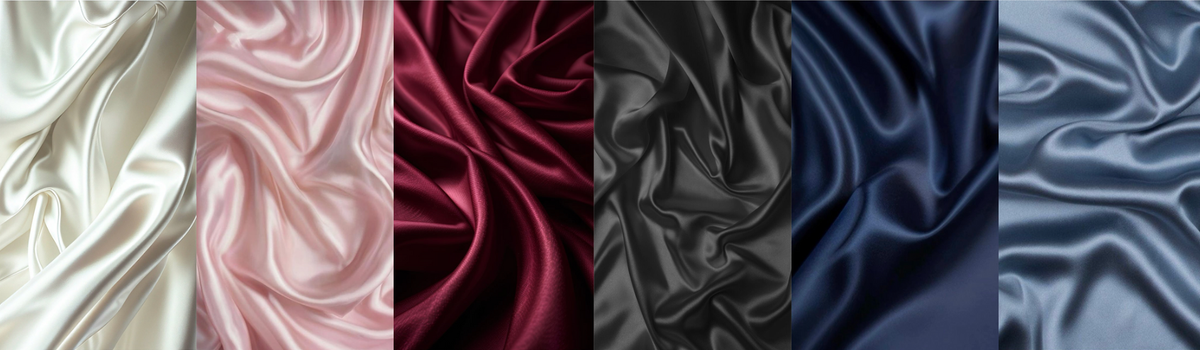
When we think of silk, we imagine elegance: the soft rustle of a gown, the luminous sheen of a tie, the effortless drape that seems to capture light itself. But behind this symbol of luxury lies one of humanity’s oldest and most fascinating stories. A story that began thousands of years ago, with a silkworm and a cup of tea.
The Story
The production of silk began in Neolithic China, within the Yangshao culture, around the 4th millennium BCE. According to legend, Empress Leizu (also known as Hsi-Ling-Shih) discovered silk when a cocoon fell into her tea. As it unraveled in the hot water, she noticed the thread’s beauty and strength, and thus, sericulture was born.
For millennia, China guarded the secret of silk-making with extreme care. The penalty for revealing it was death. Silk became not only a luxurious fabric but also a symbol of power, wealth, and divine beauty. During the Tang dynasty, colors of silk denoted social rank, and even peasants were forbidden to wear it.
It wasn’t until the Silk Road opened in 114 BCE that China began exporting silk westward. This precious fabric became so valuable that it was once used as currency, traded for horses, gold, and spices. Even after the trade expanded, China maintained its monopoly for over a thousand years, shaping the course of civilizations across Asia and Europe.
The Craft
Silk’s production, or sericulture, is both delicate and intricate. It begins with Bombyx mori, the domesticated silkworm, which feeds exclusively on mulberry leaves. Once the worm spins its cocoon, a single thread nearly a kilometer long, it is carefully steamed to preserve the silk fiber. The filament is then unraveled, spun, and woven into fabric.
In ancient times, this process was entirely manual, demanding immense patience and precision. Over centuries, new technologies transformed it, from the Jacquard loom of the Industrial Revolution to modern automated silk mills. Yet, the essence of silk-making remains the same. A blend of nature’s genius and human craftsmanship.
Silk is paradoxical: delicate yet strong, lightweight yet durable, luxurious yet natural. Its thermoregulating and hypoallergenic properties make it as practical as it is beautiful, explaining why it has survived millennia without losing its allure.
The Impact
Silk shaped the world’s history in ways few materials ever have. It gave its name to the Silk Road, the legendary trade network that connected East and West, exchanging not only fabrics but also ideas, technologies, and beliefs. From the robes of Chinese emperors to the tunics of Roman elites, silk became a universal symbol of refinement and prestige.
Its cultural reach extended far beyond clothing. In China, silk was used for painting, writing, and religious banners; in Persia, it became a canvas for intricate patterns; in Europe, it transformed Renaissance art and fashion. Even today, silk remains deeply tied to notions of artistry, ceremony, and sensuality. A fabric that speaks to humanity’s desire for beauty and transcendence.
Today
Today, silk has reclaimed its status as a luxury material, even as modern technology has introduced alternatives like nylon and polyester. China continues to lead global production, followed by India and Japan, while sustainable brands are reimagining silk through ethical sericulture and eco-conscious design.
From Hermès scarves to Gucci blouses and Dior gowns, silk remains a favorite in haute couture. But beyond fashion, it’s found new life in biodegradable textiles, medical sutures, and even biotechnology, proving that this ancient material still has a futuristic edge.
My Thoughts
Learning about silk reminded me that beauty often comes with complexity. What seems effortless and elegant hides centuries of human ingenuity and environmental responsibility. As I explored the long history of silk, I realized how disconnected we can be from the materials that surround us.
It also made me reflect on my own relationship with fashion. I still have a lot to learn, and a lot of effort to make, to dress in a way that doesn’t harm the planet. Understanding silk’s natural origins and sustainable potential reminded me that elegance doesn’t have to come at a cost. It can be ethical, conscious, and timeless.
This journey into silk’s story isn’t just about a fabric; it’s about how tradition, creativity, and responsibility can intertwine, ust like the shimmering threads of silk itself.
See you in the next one,
Xoxo
Eden
Resources: History_of_silk - fashion-archives-history-silk - history-of-silk - the-history-of-silk-the-story-of-the-luxurious-fabric