Transparent Fashion

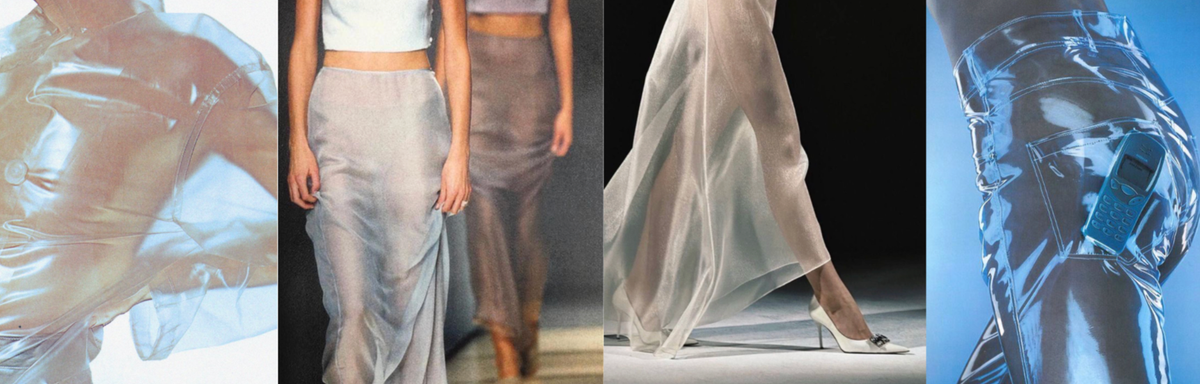
Transparent fashion, also known as see-through or sheer clothing, refers to garments made of lace, mesh, chiffon, muslin, gauze, latex, or other translucent materials that reveal the body or undergarments beneath. Whether subtle or bold, this aesthetic has existed for centuries, oscillating between scandal and sophistication.
Today’s “naked dress” trend may feel modern, but transparency in fashion has always reflected society’s evolving relationship with the body, modesty, and power.
What Is Transparent Fashion?
Transparent garments are made from fabrics that allow light, and sometimes skin, to pass through.
- Main Materials:
- Sheer fabrics: chiffon, georgette, gauze, muslin
- Mesh & net fabrics: commonly used in sportswear
- Fine knits: tights, stockings, lingerie
- Latex & plastic: often used in fetish fashion or statement outerwear
The term “illusion” is often used when skin-tone fabrics create the appearance of nudity, such as illusion bodices or sleeves.
Transparency can be intentional, or accidental, as certain fabrics become see-through under flash photography or bright lights.
18th & 19th Century
Transparent fashion was already controversial in the late 1700s.
The Chemise à la Reine
Worn by Marie Antoinette in a 1783 portrait by Élisabeth Vigée Le Brun, this lightweight muslin gown resembled an undergarment. Critics considered it indecent.
By the 1790s, writer Louis-Sébastien Mercier described women dressing “à la sauvage”, semi-sheer gowns worn over flesh-colored bodystockings, exposing arms and neckline.
Caricaturists like Isaac Cruikshank mocked this neoclassical trend, which clung to the body and emphasised form.
Early 20th Century
In 1913, ultra-thin dresses were labeled “x-ray dresses” because they revealed too much of the female body.
In Los Angeles, authorities considered banning them. In Portland, arrests were even ordered.
The controversy showed how women’s clothing choices were directly linked to public morality debates.
Hollywood & Iconic Moments
- Clara Bow (1925)
- In My Lady of Whims, Clara Bow wore a daring transparent gown that shocked audiences.
- Marilyn Monroe (1962)
- When Marilyn Monroe sang “Happy Birthday” to John F. Kennedy, her Jean Louis dress, covered in crystals over sheer fabric, revived the illusion of nudity in mainstream culture.
The 1960s – 1990s
The late 1960s marked a turning point.
- Yves Saint Laurent introduced sheer looks in 1968.
- Designers in the 1970s–80s like Halston and Dior experimented with subtle transparency.
- The 1990s brought bold reinterpretations from Prada, Gucci, Versace, and Jean Paul Gaultier.
In 2000, Jennifer Lopez wore her iconic sheer green Versace gown at the Grammys, so widely searched it helped inspire Google Images.
21st Century
Since 2008, sheer fashion has dominated red carpets and runways.
- Defining Moments:
- Rihanna at the 2014 CFDA Awards in a fully transparent Adam Selman gown
- Beyoncé at the 2015 Met Gala
- Florence Pugh at Valentino Haute Couture 2022
- 2025 Grammy & BRIT Awards featured multiple fully sheer looks
Sheerness is now seasonless, appearing from haute couture to ready-to-wear collections.
Cultural Power & Feminist Expression
For some women, wearing sheer clothing is a political statement.
When Rose McGowan wore a nearly naked dress in 1998, she later revealed it was her response to surviving assault.
Florence Pugh publicly defended her right to wear transparent clothing, emphasizing bodily autonomy and self-expression.
Transparent fashion today can symbolize:
- Reclaiming control over the body
- Challenging puritanical standards
- Redefining modesty
The Limits & Criticism
It is important to address the negative aspects.
- 1. Sexualization & Objectification
- Sheer garments can fuel media sensationalism and reduce women to their bodies.
- 2. Double Standards
- Men rarely face equivalent scrutiny for revealing fashion.
- 3. Cultural Context
- What is empowering for one woman may feel exploitative for another.
- 4. Commercialisation of Feminism
- Brands sometimes market “empowerment” while profiting from controversy.
Transparency in fashion walks a fine line between empowerment and commodification.
My Thought
Transparent fashion fascinates me because it shows how clothing is never just fabric, it is political, emotional, and cultural.
For centuries, sheer garments have shocked society. Yet today, they represent something deeper: confidence, autonomy, and control over one’s own image.
I think the real power of transparent fashion is choice. When a woman chooses to reveal her body on her own terms, the narrative changes. It is no longer about scandal, it is about ownership.
Sheer is not just sexy. It is symbolic.
See you in the next one,
Eden
Resources:
- Wikipedia : See-through_clothing
- Vogue: sheer-dress-trend
- WWD: fa00026687_0021_enhanced
Photos: