VOGUE: How a magazine shaped fashion, power, and culture

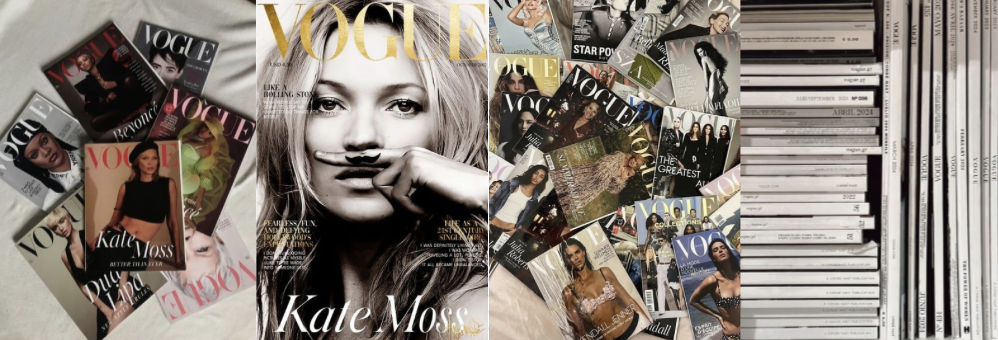
Vogue is often described as “high fashion’s bible”, and for good reason. Founded in 1892, Vogue has not only documented fashion history, it has actively shaped it. From haute couture to pop culture, from elite society to mass consumption, Vogue sits at the intersection of fashion, power, media, and identity.
Yet, despite its influence, Vogue is sometimes dismissed as superficial. This article explores how Vogue became the most powerful fashion publication in the world, the people who shaped it, and the limits and contradictions of its power.
Vogue (1892–1909)
Vogue was founded in New York in 1892 by Arthur Baldwin Turnure as a weekly society journal. Its mission was to celebrate the “ceremonial side of life”, targeting the emerging New York upper class.
- Covered social events, etiquette, leisure, fashion
- Included sports and culture for male readers
- First issue price: 10 cents
- First editor: Josephine Redding
At this stage, Vogue was not revolutionary. It was exclusive, aspirational, and elitist by design.
- A Turning Point: Condé Nast
Everything changed in 1909, when Condé Montrose Nast bought Vogue. He immediately saw fashion not as a niche interest, but as a mass cultural force in the making.
Nast:
- Transformed Vogue into a women-focused publication
- Improved print quality and photography
- Expanded internationally
- Understood fashion as desire + aspiration
Vogue was no longer just reporting fashion — it was creating fantasy.
Vogue and the Rise of Modern Fashion Media
- Innovation Through Imagery
Vogue became famous for its visuals:
- 1932: first color photograph on a magazine cover
- Shift from illustration to fashion photography
- Collaboration with legendary photographers like Irving Penn, Richard Avedon, Annie Leibovitz
“A fashion photograph is not a photograph of a dress; it is a photograph of a woman.” Alexander Liberman
Fashion became storytelling, not just clothing.
Vogue’s Editors
In over 130 years, American Vogue has had only seven editors-in-chief. Three of them changed fashion forever.
- Diana Vreeland (1963–1971): Fantasy and Excess
Vreeland transformed Vogue into a dream machine:
- Exotic locations
- Radical silhouettes
- Youth culture and rebellion
- Launched Twiggy and street fashion aesthetics
She believed Vogue should show readers what they didn’t know they wanted.
Limit:Her era was criticised for extravagance and detachment from reality. A magazine of dreams during politically and economically unstable times.
- Grace Mirabella (1971–1988): Practical Fashion
Mirabella responded to the feminist movement:
- Fashion for working women
- More text, interviews, health and culture
- Less fantasy, more function
Limit:Her era became known as “The Beige Years”, criticised for being visually uninspiring.
- Anna Wintour (1988–2025): Power, Celebrity, and Global Influence
Anna Wintour redefined Vogue’s authority:
- Mixed high and low fashion (jeans + couture)
- Introduced celebrities on covers
- Transformed the Met Gala into a global media event
- Supported designers like McQueen, Galliano, Marc Jacobs
She understood that fashion, celebrity, and capitalism were inseparable.
Limits & Criticism:
- Accused of elitism and lack of diversity (especially early on)
- Reinforced unrealistic beauty standards
- Vogue often reacted late to social movements (body positivity, sustainability)
Yet, under Wintour, Vogue survived:
- The digital revolution
- The decline of print
- The globalisation of fashion
Vogue and the Fashion Industry
The global fashion industry is valued at $2.7 trillion. Vogue plays a central role in:
- Trend forecasting
- Designer legitimacy
- Brand storytelling
- Fashion marketing
Fashion today is:
- Designed in one country
- Produced in another
- Sold worldwide
The Dark Side
Despite its glamour, the fashion industry includes:
- Worker exploitation
- Environmental damage
- Fast fashion overproduction
- Cultural appropriation
Vogue has increasingly addressed these issues, but often from within the system, not against it.
Vogue in the Digital Age
Vogue now exists across:
- Website
- Social media
- Podcasts
- Newsletters
In 2025, Chloe Malle became Head of Editorial Content, marking a shift toward:
- Fewer print issues
- More thematic editions
- Digital-first strategy
Limit:Can a luxury print magazine remain relevant in a fast, digital, democratised world?
Why Vogue Still Matters
Vogue has survived:
- World wars
- Feminist revolutions
- The fall of social class systems
- Digital disruption
It remains powerful because it adapts. Slowly, imperfectly, but strategically.
As long as fashion exists as identity, fantasy, and power, Vogue will remain part of the conversation.
My Thought
Vogue fascinates me because it represents both the best and the worst of fashion. It is inspiring, visionary, and culturally rich, but also deeply tied to elitism, capitalism, and exclusion.
I don’t see Vogue as neutral. I see it as a mirror: reflecting society’s desires, fears, and contradictions. Loving Vogue doesn’t mean ignoring its flaws, it means understanding its influence and questioning how that power is used.
Fashion is not frivolous. It is language. And Vogue is one of its loudest voices.
See you in the next one,
Xoxo
Eden
Resources
Websites :
- Britannica: https://www.britannica.com/art/fashion-industry
- Wikipedia: https://en.wikipedia.org/wiki/Vogue_(magazine)
- Glam Observer: https://glamobserver.com/the-history-of-vogue/
- Saboteur: https://saboteur.studio/stories/the-story-of-vogue-luxury-is-a-drug/
Photos :