Degrowth and Fashion

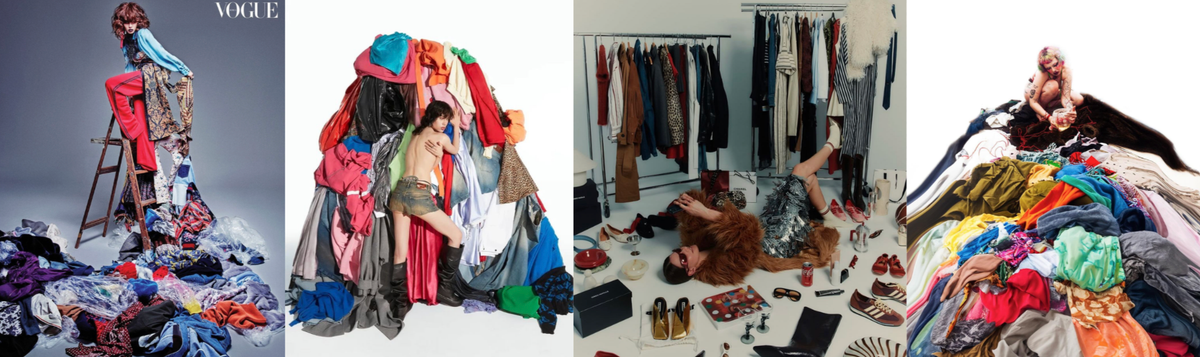
The fashion industry is one of the most resource-intensive industries in the world. Each year, approximately 100 billion garments are produced globally, while 92 million tonnes of textile waste end up in landfills. Even more striking, less than 1% of clothing is recycled into new garments.
Despite growing conversations around sustainability, the industry is becoming less circular, not more. In 2024, global textile production reached 132 million tonnes, more than double its volume in 2000. This imbalance reveals a fundamental issue: fashion operates on a linear model, produce, consume, discard.
Historically, clothing followed a circular logic: garments were repaired, reused, and passed down. Industrialisation flipped this system, making clothing cheaper, faster, and disposable.
What Is Degrowth?
Degrowth proposes a planned reduction in production and consumption, focusing on well-being, equity, and sustainability rather than profit maximisation.
Its core values include:
- Sufficiency instead of excess
- Care instead of disposability
- Cooperation instead of competition
These principles directly clash with the fashion industry's dominant logic of mass production, efficiency, and constant growth.
This raises a key question: Can an industry built on selling more survive by producing less?
Upcycling
Unlike recycling, which breaks materials down, upcycling transforms waste into higher-value products.
Examples include:
- Turning discarded food into natural textile dyes
- Reusing sailcloth to create handbags
- Transforming fabric scraps into new garments
Upcycling is not just a technique, it’s a philosophy. It reframes waste as a resource, encouraging us to reconnect with:
- The origin of materials
- The people behind production
- The ecosystems involved
In this sense, upcycling aligns strongly with degrowth values, promoting creativity, care, and reduced resource extraction.
Local Systems and Human Connections
Research on upcycling practices, particularly in textile-producing regions like Turkey, highlights the importance of local and relational systems.
Key dynamics include:
- Collaboration between designers, manufacturers, and NGOs
- Partnerships with local communities, such as rural women producing handwoven garments
- Use of waste-sharing platforms, acting as “libraries” for textile waste
These systems create social and ecological value, not just economic profit.
A powerful idea emerges from these practices: Nature produces no waste, everything becomes part of a cycle.
Upcycling attempts to mimic this natural logic within fashion.
Circular Fashion
Circular fashion has become a major industry buzzword. Concepts like:
- Resale platforms
- Textile-to-textile recycling
- Circular business models
are gaining visibility.
Successful examples include:
- Platforms like Vinted and Vestiaire Collective, making resale mainstream
- Innovations in recycled fibres and low-carbon materials
However, the reality is more complex.
The Limits
- Most circular initiatives remain small-scale pilots
- The system still favours virgin material production
- Circular jobs (sorting, recycling) are often informal and unsafe
- Circularity risks becoming a marketing tool rather than systemic change
To scale circularity, three major challenges must be addressed:
- Investment in scalable solutions
- Regulation that makes circularity the default
- Demand driven by brands, not just consumers
The Role of Design
Design is central to transforming fashion.
- Key Circular Design Strategies
- Cradle-to-Cradle Design (C2C)Products are designed to be fully biodegradable or recyclable
- Zero Waste DesignEliminates textile waste during production
- Sustainable MaterialsOrganic cotton, recycled polyester, mushroom leather, lab-grown silk
These approaches aim to extend product life cycles and reduce environmental impact.
- Industry Examples
- Eileen Fisher: repurposing returned garments
- Patagonia (Worn Wear): repairing and reselling used clothing
- Adidas x Parley: transforming ocean plastic into sportswear
These initiatives show that circular design is not just theoretical—it is already reshaping parts of the industry.
The Limits of Degrowth and Circular Fashion
While promising, both degrowth and circular fashion face important limitations:
- Economic resistance: growth remains central to profitability
- Accessibility issues: sustainable fashion can be expensive
- Lack of awareness: limited circular literacy among industry actors
- Policy gaps: insufficient funding and support for innovation
- Scaling challenges: local initiatives struggle to compete globally
Upcycling, in particular, remains a niche practice, limited by access to materials, skills, and infrastructure.
Toward a New Fashion System
The transition toward a sustainable fashion industry requires more than innovation, it demands systemic change.
This includes:
- Rethinking how we produce and consume
- Valuing durability over novelty
- Building local, collaborative networks
- Embedding care and responsibility into design
Circularity is not new, but applying it to a global, high-speed industry is the real challenge.
My Thought
What I find most interesting is that the solution is not just technological—it’s cultural. Upcycling and degrowth force us to rethink our relationship with clothing. Instead of seeing fashion as something temporary, we begin to see it as something with history, value, and meaning.
However, I don’t think degrowth alone can “fix” fashion. The industry is too deeply rooted in growth and globalisation. But what feels realistic is a hybrid future: where large systems become more circular, while smaller, local initiatives redefine creativity and value.
In a way, upcycling is not just about waste, it’s about changing how we see beauty and worth.
Ressources:
- The conversation: degrowth-and-fashion-how-upcycling-innovators-show-us-how-to-rethink-and-reuse-waste-258869
- H&M Foundation: why-fashion-is-less-circular-than-ever-and-what-itll-take-to-change-course
- Re-Fashionable: the-transformative-power-of-circular-design-in-fashion
Photos: