Drum Magazine & Fashion
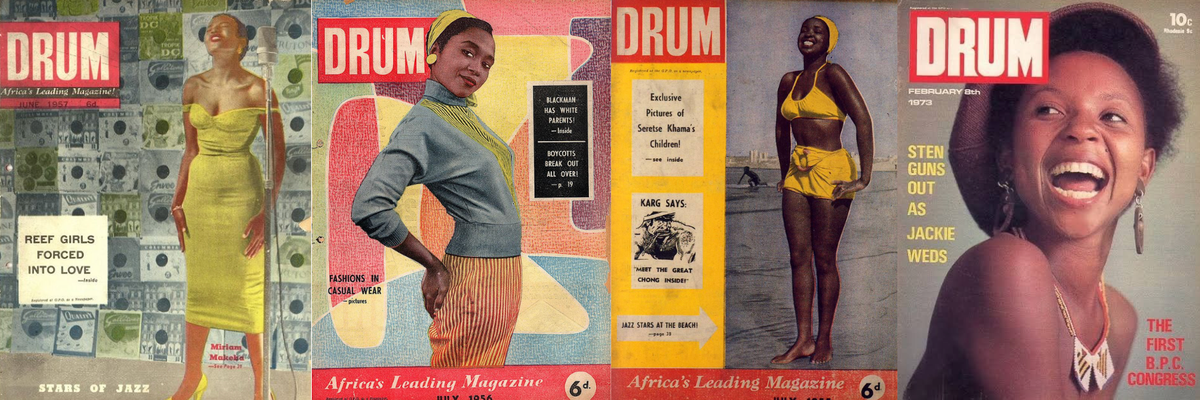
Drum Magazine was never just a magazine. It was a cultural revolution.
Founded in 1951 in apartheid South Africa, Drum became one of the most important Black publications on the African continent. At a time when Black voices were silenced, stereotyped, or ignored, Drum created a platform where Black South Africans could see themselves represented with dignity, style, complexity, and truth.
What made Drum special was its unique combination of journalism, politics, fashion, photography, music, and urban culture.
It told the truth about apartheid while celebrating Black beauty.
And that contradiction, the coexistence of glamour and oppression, is exactly what made it powerful.
The Birth of Drum
Apartheid changed South African society after 1948.
As the National Party enforced segregation laws, Black South Africans were increasingly controlled, displaced, and oppressed.
At the same time, urban Black culture was growing, especially in Sophiatown, a multicultural neighborhood where music, nightlife, fashion, and political discussion flourished.
This is where Drum found its voice.
Originally launched as The African Drum, the magazine struggled at first.
But when Anthony Sampson became editor, everything changed.
The editorial team quickly understood what readers wanted:
- Jazz
- Sport
- Celebrities
- Fashion
- Real stories about Black urban life
Drum stopped speaking about Black South Africans.
It started speaking to them.
The Drum Writers
The legendary “Drum Boys” transformed journalism.
Writers like:
- Henry Nxumalo
- Can Themba
- Todd Matshikiza
- Lewis Nkosi
- Es'kia Mphahlele
created a new literary and journalistic style.
Their writing was different.
It mixed:
- fiction
- reportage
- street language
- personal storytelling
- jazz rhythm
Scholar Michael Titlestad called it “improvisation,” comparing it to jazz.
Drum journalism wasn’t cold and distant.
It was alive.
It felt like the streets of Johannesburg.
This style later influenced what America would call “New Journalism” in the 1960s.
Drum did it first.
Fashion and Style
Fashion was central to Drum’s identity.
Its covers featured glamorous Black women, stylish musicians, beauty queens, and celebrities.
At a time when mainstream media often dehumanized Black people, Drum used fashion photography to create alternative images of Black elegance.
Figures like Miriam Makeba became style icons through Drum.
The magazine showed:
- tailored suits
- polished hairstyles
- evening dresses
- jazz-club glamour
- urban sophistication
Fashion in Drum wasn’t superficial.
It was political.
To dress well under apartheid was to claim dignity.
To be seen was resistance.
Photography played a huge role in this visual storytelling.
Photographers like:
- Jürgen Schadeberg
- Peter Magubane
- Bob Gosani
captured both beauty and struggle.
Drum created a fashion archive of Black modernity.
Investigative Journalism
Drum wasn’t just style.
It was fearless journalism.
Henry Nxumalo became one of Africa’s greatest investigative journalists.
His investigations exposed:
- prison brutality
- labor abuse
- farm exploitation
One of his most famous investigations took place in Bethal farms, where Black workers were abused.
Nxumalo went undercover to reveal the truth.
The article sold out.
Public reaction reached Parliament.
That moment changed Drum forever.
It proved journalism could create political pressure.
But truth had a cost.
In 1957, Nxumalo was murdered while investigating another story.
His death became symbolic of the dangers of truth-telling under apartheid.
Drum and the Construction of Black Culture
Drum documented a Black cultural renaissance.
It covered:
- jazz clubs
- shebeens
- beauty contests
- gangsters
- musicians
- actors
- writers
Groups like the Manhattan Brothers and artists like Miriam Makeba gained visibility.
Drum preserved an entire urban Black world.
Without it, much of this history would have disappeared.
Its archives remain some of the most important visual records of Black South African life.
The Contradictions
Drum was revolutionary, but imperfect.
That’s important to acknowledge.
- A Male-Dominated Perspective
- Most of the writers were men.
- Women were often represented through beauty, glamour, and romance rather than political thought.
- Even when women appeared on covers, they were frequently reduced to visual symbols.
- This limits Drum’s feminist legacy.
- Problematic Advertising
- Around 60% of Drum was advertising.
- Some ads promoted skin-lightening products and hair-straightening products.
- These reinforced colonial beauty standards.
- So while Drum celebrated Black beauty, it also profited from harmful beauty ideals.
- This contradiction is impossible to ignore.
- Not Explicitly Revolutionary
- Some critics argued Drum wasn’t radical enough.
- Lewis Nkosi believed its political potential was never fully realized.
- Others felt it focused too much on entertainment.
- It documented oppression, yes.
- But it was not directly part of the liberation movement.
- That remains one of its biggest criticisms.
Drum’s Influence on Fashion Education Today
Today, Drum has become a valuable educational archive.
The “Drum Magazine Project” uses Drum archives to teach fashion theory through a decolonial lens.
Students study forgotten figures featured in the magazine and redesign covers inspired by them.
This changes how fashion history is taught.
Instead of focusing only on Europe, it centers African narratives.
It challenges colonial fashion history.
And that matters.
Because fashion history has often excluded Black contributions.
Drum helps correct that.
Why Drum Still Matters
Drum became the largest African magazine of its time.
At its peak, nearly 250,000 copies were distributed across Africa.
Its influence reached:
- Ghana
- Nigeria
- Kenya
- Uganda
- Zimbabwe
Today, its influence can still be seen in:
- fashion editorials
- archival photography
- African storytelling
- Black media culture
Its aesthetic continues to inspire designers, stylists, and photographers.
Drum proved that fashion and journalism could work together.
One to tell the truth.
The other to shape identity.
My Thought
What fascinates me most about Drum is how it used fashion not as decoration, but as a language.
When we think of political resistance, we often think of speeches, protests, or laws.
But Drum shows that clothing, photography, and style can also be forms of resistance.
Fashion became a way for Black South Africans to control their image in a society built to distort it.
At the same time, I think it’s important to look critically at Drum.
Its sexism and problematic beauty advertising remind us that even progressive media can carry contradictions.
For me, Drum represents something very modern: the idea that media, fashion, and politics are never separate.
They shape how we see ourselves.
And who gets to be seen.
Resources:
- The conversation: journalism-of-drums-heyday-remains-cause-for-celebration-70-years-later-142668
- UJContent: 9942510107691
- Aperture: truth-telling-high-fashion
Pictures: