“One Garment, One History” The Trench Coat

Introduction
Few garments have achieved the timeless status of the trench coat. Instantly recognizable by its double-breasted front, belted waist, and elegant silhouette, the trench coat has remained a fashion staple for more than a century.
What many people do not realise is that this symbol of sophistication was originally designed for war. Its journey from muddy battlefields to Hollywood red carpets is one of the most fascinating stories in fashion history.
The Origins of Waterproof Outerwear
The trench coat's story begins long before World War I.
In 1823, Scottish chemist Charles Macintosh developed a revolutionary waterproof fabric by placing rubber between two layers of cotton. These raincoats, known as "Macks," were highly effective at keeping people dry.
However, they had significant flaws:
- Poor breathability
- Unpleasant odors
- Tendency to become uncomfortable in warm weather
Despite these issues, waterproof coats quickly became popular throughout Britain, particularly due to the country's rainy climate.
The Race to Create the Modern Trench Coat
The invention of the trench coat is often disputed between two British companies:
Aquascutum
In 1853, John Emary patented a breathable water-resistant fabric and renamed his company Aquascutum, meaning "water shield" in Latin.
His coats became popular among British gentlemen and military officers.
Burberry
In 1879, Thomas Burberry developed gabardine, a revolutionary waterproof yet breathable fabric.
Unlike previous materials, gabardine was created by waterproofing individual fibers before weaving them together. This made the fabric:
- Lighter
- More comfortable
- More durable
- More breathable
The fabric became popular among explorers, aviators, and adventurers, including famous polar explorers.
Although both brands claim credit for inventing the trench coat, historians generally agree that they perfected and popularised an already existing concept rather than creating it entirely from scratch.
World War I: The Birth of the Trench Coat
The trench coat as we know it today emerged during World War I.
Traditional military greatcoats were made from thick wool and became extremely heavy when soaked with rain and mud. Soldiers needed something lighter and more practical.
The British military adopted coats featuring:
- Double-breasted construction
- Wide lapels
- Waterproof fabric
- Large map pockets
- Storm flaps
- Waist belts with D-rings
- Adjustable cuffs
- Raglan sleeves for movement
The coat was specifically designed to help officers survive the difficult conditions of trench warfare.
This is where the garment earned its famous name: the trench coat.
A Symbol of Status and Class
Interestingly, trench coats were not issued to every soldier.
Only officers and higher-ranking personnel could wear them, and they often had to purchase them themselves.
As a result, the trench coat became associated with:
- Authority
- Prestige
- Professionalism
- Social status
Even civilians began purchasing trench coats during the war as a sign of patriotism and support for the military.
Hollywood's Love Affair with the Trench Coat
After World War I, veterans continued wearing their trench coats in civilian life.
However, Hollywood transformed the garment into a cultural icon.
Humphrey Bogart
The trench coat became legendary thanks to Humphrey Bogart in films such as:
- Casablanca (1942)
- The Maltese Falcon (1941)
His characters projected mystery, intelligence, and sophistication.
Audrey Hepburn
The trench coat's appeal expanded further when Audrey Hepburn wore one in Breakfast at Tiffany's.
The garment became associated not only with detectives and spies but also with elegance and femininity.
Over time, the trench coat appeared in countless films, including:
- The Pink Panther
- Le Samouraï
- Blade Runner
- The Matrix
The Trench Coat in Women's Fashion
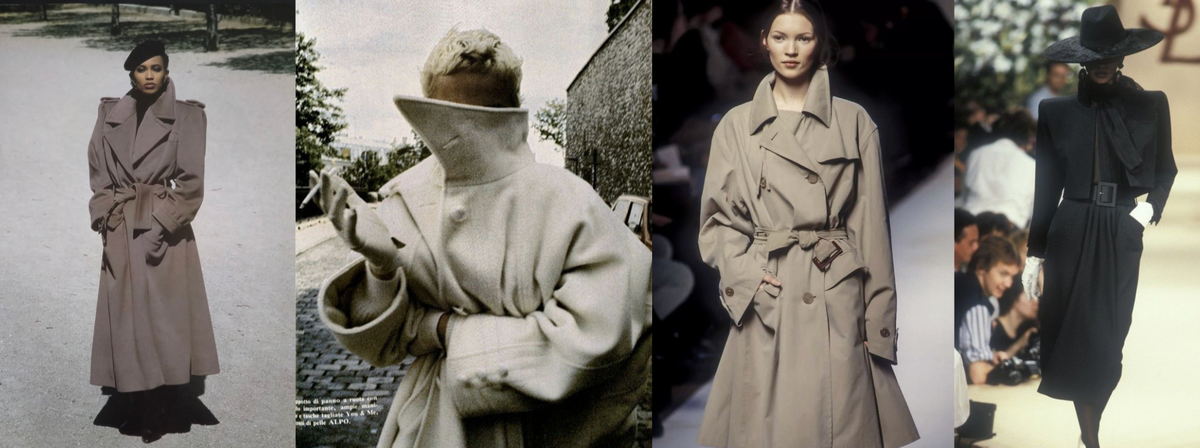
Throughout the twentieth century, women embraced the trench coat for its combination of style and practicality.
Fashion icons such as:
- Brigitte Bardot
- Mia Farrow
- Twiggy
helped establish the trench coat as an essential wardrobe piece.
Designers experimented with:
- Different lengths
- New fabrics
- Bright colors
- Oversized silhouettes
Yet the coat's core design remained remarkably unchanged.
The Trench Coat Today
Today, the trench coat remains one of fashion's most enduring garments.
Modern versions often include:
- Sustainable materials
- Detachable linings
- Contemporary cuts
- New color palettes
Brands like Burberry continue to reinvent the trench coat while preserving its iconic features.
More than a century after its military origins, it remains a symbol of timeless elegance.
The Limits and Controversies
Although the trench coat is celebrated today, its history is not without complexities.
Military Origins
The coat was born from warfare and is closely tied to the harsh realities of World War I. The glamour associated with trench coats often overshadows the suffering experienced by soldiers in the trenches.
Symbol of Social Hierarchy
Because only officers could wear trench coats during WWI, the garment also represented class distinctions within the military.
Cultural Misconceptions
The trench coat has occasionally faced negative associations in popular culture, particularly following certain criminal cases in the late twentieth century where media coverage linked long coats to violence. These associations were largely exaggerated but temporarily affected public perception.
Despite these issues, the trench coat has successfully maintained its status as a fashion classic.
My Thought
What fascinates me most about the trench coat is how a garment designed for survival became a symbol of elegance. Very few fashion pieces manage to stay relevant for over a century while keeping their original identity.
The trench coat perfectly balances functionality and style. Whether worn by soldiers, movie stars, or everyday people, it continues to communicate confidence, sophistication, and timelessness.
Its history reminds us that some of fashion's greatest icons were born not on the runway, but through innovation, necessity, and adaptation.
Resources:
- The Style Historian: the-history-of-the-trench-coat
- The Rake: style-101-the-trench-coat
- Contrado: history-of-the-trench-coat
- The Shirt Company: the-fascinating-century-spanning-history-of-the-women-s-trench-coat
- Wikipedia: Trench_coat
Photos: