Why We Associate Satin With Femininity

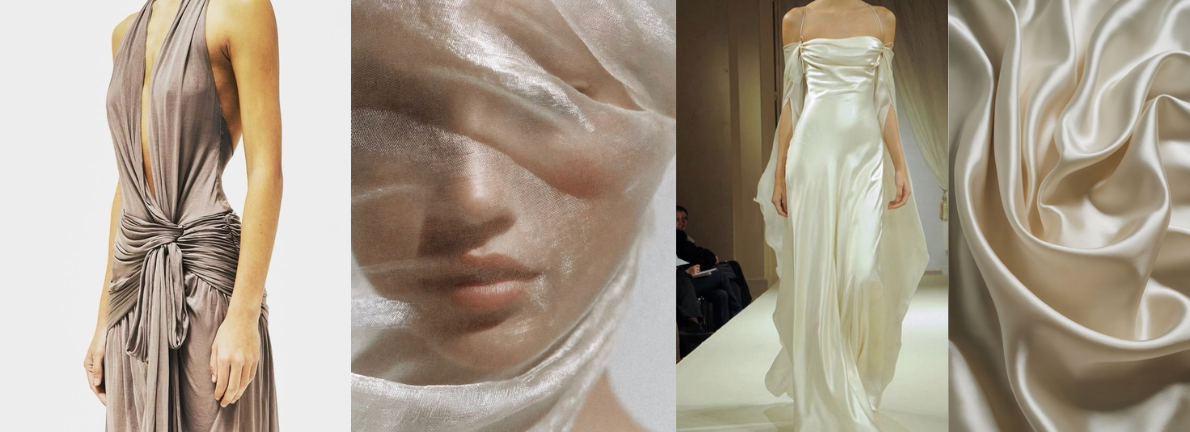
When we think of femininity in fashion, a few materials instantly come to mind: lace, silk, velvet, and perhaps most of all, satin. Smooth, luminous, and fluid, satin has long been associated with elegance, sensuality, and glamour. From Victorian ball gowns to Hollywood screen sirens and modern slip dresses, satin has accompanied changing ideas of womanhood for centuries.
But why has this particular fabric become so closely linked with femininity? The answer lies in a fascinating combination of history, fashion, social change, and cultural symbolism.
What Exactly Is Satin?
Contrary to popular belief, satin is not a fiber but a weaving technique.
Its defining characteristic is a glossy, smooth front surface paired with a duller back. Originally woven from silk, satin is now commonly produced using polyester, rayon, acetate, and silk blends, making it more accessible than ever.
The fabric is prized for its softness, drape, and ability to catch light, creating a luxurious appearance that instantly elevates a garment.
These qualities would eventually make satin one of the most desirable fabrics in women's fashion.
The Ancient Origins of Satin
The story of satin begins in China more than two thousand years ago.
The name "satin" originates from Zaitun, now known as Quanzhou, a major Chinese port city. Chinese artisans perfected satin weaving techniques centuries before the fabric reached Europe.
Silk production was widespread throughout China, and although the most elaborate textiles were reserved for elites, silk garments were worn by many social classes on special occasions.
For centuries, silk weaving remained a closely guarded secret before spreading throughout Asia and eventually reaching Europe through trade routes.
During the Middle Ages, satin became one of the many luxury goods exchanged between China, the Arab world, and Europe. By the 12th century, satin was being produced in Italy, and by the 14th century it had become a highly prized fabric across Europe.
Because silk remained rare and expensive, satin became associated with royalty, nobility, and wealth.
From the very beginning, satin was connected to luxury and status.
Satin and the Gilded Woman: 1880–1900
By the late nineteenth century, satin had become a defining fabric of high society.
Fashionable women wore satin evening gowns covered in embroidery, sequins, lace, and decorative trims. During America's Gilded Age, wealthy women looked to Paris for fashion inspiration, and satin was a key element of this sophisticated European style.
The fashionable silhouette of the 1880s was highly structured. Corsets, bustles, and elaborate gowns created dramatic shapes designed to showcase status rather than comfort.
Satin enhanced these designs beautifully. Its reflective surface highlighted every fold, drape, and decorative detail.
By the 1890s, styles began to evolve. The famous "Gibson Girl" emerged as a new American ideal: athletic, independent, and active. Although corsets remained common, clothing became slightly more practical and reflected a growing desire for freedom.
Even as silhouettes changed, satin remained a symbol of refinement and femininity.
Fashion and Female Liberation
One of the most interesting aspects of satin's history is how it evolved alongside women's changing roles in society.
The exhibition American Woman: Fashioning a National Identity explored how fashion reflected women's gradual emancipation between 1890 and 1940.
The Gibson Girl
The Gibson Girl represented a new American woman: sporty, youthful, and confident.
She played tennis, golf, and rode horses, though still often wearing a corset.
Her appearance challenged the rigid elegance of European fashion and introduced a more modern image of femininity.
The Bohemian Woman
By the 1910s, wealthy women influenced by art and culture adopted looser silhouettes inspired by kimonos and flowing garments.
Fashion became less restrictive and more expressive.
The Flapper
The 1920s brought perhaps the most radical transformation.
Flappers cut their hair short, wore makeup, danced, smoked, and embraced unprecedented social freedom.
Interestingly, satin was no longer used to emphasize curves. Instead, it flowed over the body in loose chemise dresses that created a more androgynous silhouette.
This demonstrates an important point: satin was not always about traditional femininity. Rather, it adapted to changing definitions of what femininity could be.
Satin and the Birth of Hollywood Glamour
The association between satin and femininity reached new heights during the 1930s and 1940s.
Hollywood stars such as Jean Harlow, Greta Garbo, Katharine Hepburn, and Rita Hayworth appeared on screen wearing satin gowns that moved elegantly under studio lighting.
Designers discovered that satin photographed beautifully.
Its shine emphasized movement, highlighted the body's natural lines, and created an image of effortless glamour.
For audiences around the world, these screen sirens became the new ideal of beauty.
By this point, the direction of influence had reversed. Rather than American women looking to Europe, the world was now looking to America.
Hollywood helped cement satin's connection to sensuality, confidence, and modern femininity.
Satin and Lingerie: The Sensual Connection
Perhaps no category contributed more to satin's feminine reputation than lingerie.
In the late nineteenth century, satin first appeared in fashionable undergarments worn by Parisian women.
By the early twentieth century, corsets and petticoats gradually gave way to brassieres, slips, camisoles, and panties.
New synthetic fibers such as rayon, nylon, and polyester made satin lingerie affordable for women beyond the upper classes.
During World War II, glamorous advertisements and pin-up imagery frequently featured women wearing satin slips and camisoles.
These images deeply influenced popular culture.
As a result, satin became strongly linked to ideas of romance, intimacy, and sexuality.
When Satin Became Accessible
For centuries, satin's exclusivity reinforced its luxurious image.
That changed during the twentieth century.
The invention of rayon satin, acetate satin, polyester satin, and duchesse satin dramatically lowered production costs.
What had once been reserved for royalty became available to middle-class consumers.
This democratization expanded satin's presence in everyday fashion:
- Bridal gowns
- Evening dresses
- Prom dresses
- Lingerie
- Accessories
- Home décor
The fabric retained its aura of luxury while becoming attainable for millions of women.
Satin's Modern Reinvention
Today, satin is no longer reserved for special occasions.
Designers have embraced what many call "casual satin."
Modern wardrobes feature satin:
- Slip dresses
- Tailored blazers
- Track pants
- Shirts
- Bags
- Shoes
- Athleisure pieces
Brands from luxury houses to contemporary labels have incorporated satin into everyday dressing.
The appeal lies in its versatility. Satin can feel glamorous without appearing overly formal.
A satin skirt paired with a simple T-shirt or sneakers creates a balance between luxury and ease.
This reflects contemporary ideas about femininity: confident, flexible, and self-defined.
The Limits of Satin's Feminine Image
Although satin is often marketed as inherently feminine, there are important limitations to this association.
Femininity Is Not Defined by Fabric
A fabric itself is not feminine or masculine.
These meanings are socially constructed and vary across cultures and historical periods.
The same satin that appears in lingerie has also been used in menswear, ceremonial garments, military uniforms, and athletic clothing.
Historical Restrictions
For centuries, satin was a luxury available primarily to wealthy women.
Many of the glamorous images associated with satin exclude the experiences of working-class women who could not afford such garments.
Beauty Standards
Satin has often been used to reinforce narrow beauty ideals.
Victorian satin gowns required restrictive corsets, while Hollywood glamour promoted specific body standards.
These images can sometimes create unrealistic expectations of femininity and beauty.
Sustainability Concerns
Modern satin is frequently made from synthetic fibers such as polyester.
While affordable, these materials can contribute to environmental concerns associated with fast fashion and textile waste.
As consumers become more environmentally conscious, the fashion industry continues to explore more sustainable satin alternatives.
Why Satin Still Feels Feminine
Despite changing trends, satin remains associated with femininity because it has continuously accompanied major transformations in women's fashion.
It dressed Victorian socialites, liberated flappers, Hollywood icons, rebellious punks, and modern women alike.
Its softness, fluidity, and luminosity create a visual language often linked to grace, sensuality, and confidence.
Yet satin's true significance is not that it represents one version of femininity.
Rather, it reflects how femininity itself has evolved over time.
My Thought
What fascinates me most about satin is that its history mirrors the history of women themselves. The fabric has been present through moments of restriction, liberation, glamour, rebellion, and self-expression. While satin is often viewed as a symbol of traditional femininity, its journey reveals something much more interesting: femininity is constantly changing.
Today, satin is no longer confined to ballroom gowns or lingerie. It can be worn casually, powerfully, romantically, or even rebelliously. That versatility is exactly why it remains relevant. Satin doesn't define femininity, it adapts to whatever femininity means in a particular era.
For me, that ability to evolve is what makes satin one of fashion's most enduring fabrics.
Resources:
- NRP: the-feminine-mystique-expressed-in-silks-and-satins
- Liatlevyazan: the-satin-rush-why-everybody-wears-satin
- The Frick Pittsburg: Story-Trends-Through-the-Decades-Spring-Fashion-1880-1910
Photo: