Alaïa: Sculpting the Female Form

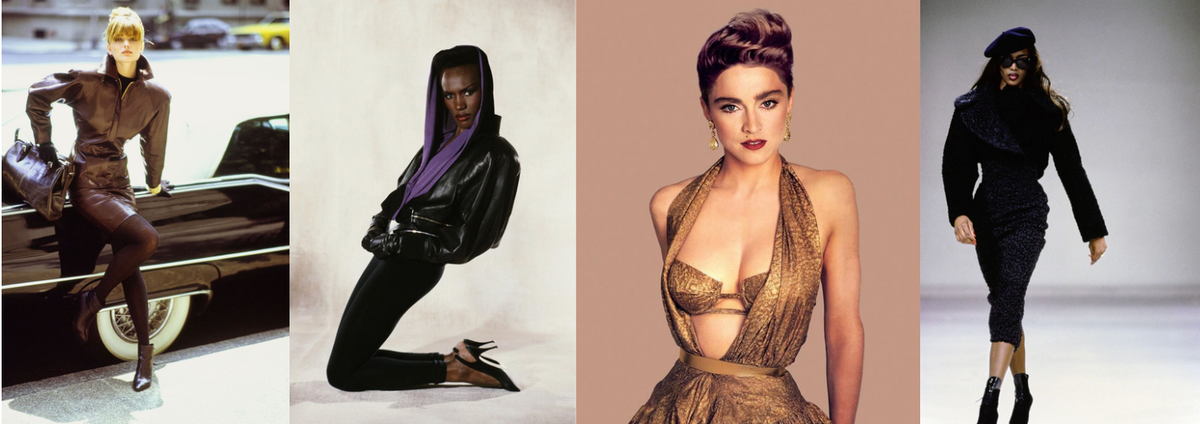
For more than four decades, Azzedine Alaïa transformed the relationship between fashion and the female body. Long before “bodycon” became a mainstream term, Alaïa was engineering dresses that sculpted, lifted, compressed, and celebrated the body with almost architectural precision. His work was never simply about seduction; it was about structure, anatomy, movement, and confidence.
Nicknamed the “King of Cling,” Alaïa built a fashion universe outside the traditional system. He rejected seasonal schedules, refused advertising, ignored trends, and rarely cared for celebrity spectacle. Yet despite, or perhaps because of, this independence, women across generations became devoted to his designs. From actresses and aristocrats to supermodels and first ladies, Alaïa created clothing that made women feel powerful.
From Tunisia to Paris: The Birth of a Sculptor
Born in Tunisia around 1940, Alaïa grew up surrounded by strong female figures, his grandmother, his aunts, and especially a family midwife named Madame Pineau. She introduced him to fashion magazines, art books, and the work of Pablo Picasso.
Originally, Alaïa did not intend to become a fashion designer. He studied sculpture at the École des Beaux-Arts in Tunis, fascinated by anatomy, proportion, and form. That sculptural training would later define every garment he created.
While studying, he learned sewing through his twin sister and worked for local dressmakers. Eventually, this path led him to Paris and briefly to Christian Dior in the late 1950s. The experience lasted only a few days due to immigration complications, but Paris would become his permanent home.
Instead of immediately entering the glamorous world of couture, Alaïa survived by working privately for aristocratic families, wealthy intellectuals, and actresses. In many ways, he developed like the traditional couturiers before him: slowly, quietly, and obsessively perfecting technique before fame arrived.
Sculpting Women Instead of Dressing Them
Alaïa’s greatest revolution was his understanding of the body.
While much of late 1970s and early 1980s fashion embraced oversized tailoring and androgyny, Alaïa went in the opposite direction. He reintroduced curves, waists, hips, and sensual silhouettes. His garments hugged the body like a second skin.
He pioneered many elements now considered wardrobe staples:
- Leggings
- Bandage dresses
- Bodysuits
- Corset belts
- Laser-cut leather
- Perforated fabrics
- Stretch knit dresses
- Structured bodycon silhouettes
But what made Alaïa unique was not simply sexuality. It was engineering.
He developed fabrics and knitting technologies capable of sculpting the body without visible corsetry. Some dresses lifted the body through construction alone, without seams or understructures. He worked directly on mannequins and models, cutting patterns himself, something almost unheard of among major designers.
For Alaïa, the cut mattered more than decoration. He famously said:
“I make clothes. Women make fashion.”
The Rise of the “King of Cling”
Alaïa’s greatest revolution was his understanding of the body.
While much of late 1970s and early 1980s fashion embraced oversized tailoring and androgyny, Alaïa went in the opposite direction. He reintroduced curves, waists, hips, and sensual silhouettes. His garments hugged the body like a second skin.
He pioneered many elements now considered wardrobe staples:
- Leggings
- Bandage dresses
- Bodysuits
- Corset belts
- Laser-cut leather
- Perforated fabrics
- Stretch knit dresses
- Structured bodycon silhouettes
But what made Alaïa unique was not simply sexuality. It was engineering.
He developed fabrics and knitting technologies capable of sculpting the body without visible corsetry. Some dresses lifted the body through construction alone, without seams or understructures. He worked directly on mannequins and models, cutting patterns himself, something almost unheard of among major designers.
For Alaïa, the cut mattered more than decoration. He famously said:
“I make clothes. Women make fashion.”
The Rise of the “King of Cling”
Alaïa exploded internationally in the early 1980s after editors from French Elle began wearing his radical leather and knit designs. American retailers like Bergdorf Goodman and Barneys New York quickly embraced him.
His clothes became symbols of powerful femininity.
Women such as Grace Jones, Tina Turner, Madonna, and Naomi Campbell transformed Alaïa into a cultural phenomenon.
His relationship with Naomi Campbell became legendary. Alaïa treated her like family after she arrived in Paris as a teenager, and she later referred to him as “Papa.” His atelier functioned less like a corporate fashion house and more like an artistic commune where models, artists, musicians, and designers gathered together.
Unlike many designers, Alaïa built deeply personal relationships with the women he dressed. He wanted fittings to happen directly with the client, not through stylists or assistants. He believed understanding a woman’s body and personality was essential to creating beauty.
Fashion Outside the System
One of Alaïa’s most radical acts was rejecting the traditional fashion calendar.
He refused to show collections according to industry schedules and often presented work months late, only when he felt the garments were truly finished. In an industry increasingly dominated by speed, marketing, and mass production, Alaïa represented the opposite philosophy.
He avoided:
- Advertising campaigns
- Excessive branding
- Licensing deals
- Seasonal pressure
- Trend-driven production
His atelier in the Marais district of Paris became a hybrid space: home, studio, gallery, restaurant, and creative salon. Artists, architects, musicians, and models constantly moved through the space.
This independence strengthened Alaïa’s reputation as a true craftsman rather than a corporate designer.
Precision, Craft, and Obsession
Alaïa’s process bordered on obsessive.
He could spend months, sometimes years, refining a single garment. He repeatedly dismantled and reconstructed pieces millimetre by millimetre until proportions became perfect.
His work reflected his background in sculpture:
- Circular coat constructions
- Architectural seams
- Precision draping
- Three-dimensional shaping
- Mathematical balance of proportion
He worked directly with materials like leather, jersey, and knitwear, forcing them to behave in unexpected ways. Soft fabrics gained structure; leather moved fluidly.
Many described watching Alaïa work as watching a sculptor shape clay.
Even late at night, alone in his studio, he continued refining garments by hand while documentaries played in the background. His devotion to craftsmanship became almost mythical within fashion.
The Limits and Criticism of Alaïa’s Vision
Although Alaïa is celebrated today, his work was not without criticism.
Some feminists in the 1980s argued that his hyper-body-conscious silhouettes reinforced unrealistic beauty standards and revived restrictive ideas of femininity. His push-up bustiers, corset belts, and ultra-tight dresses were sometimes viewed as fetishistic rather than liberating.
Critics also questioned whether his designs primarily celebrated already idealised bodies, particularly the tall, sculpted physiques of supermodels.
At times, his refusal to follow industry systems also created problems commercially. Stores struggled with unpredictable deliveries and inconsistent schedules. Some editors found him difficult or inaccessible.
His feud with Anna Wintour became famous after he criticized her publicly for excluding him from an exhibition. Alaïa also openly attacked the growing commercialization of fashion and criticized designers he believed prioritized spectacle over craft.
Yet these tensions are part of what made Alaïa significant. He constantly challenged the balance between commerce and artistry, questioning whether fashion could remain human in an increasingly industrialised luxury system.
Alaïa’s Legacy
After Alaïa’s death in 2017, the fashion world recognised how singular his work truly was.
Today, the house continues under creative director Pieter Mulier, who carefully balances innovation with Alaïa’s original codes:
- Precision
- Form
- Body
- Craft
Modern Alaïa still focuses on sculptural silhouettes, architectural tailoring, and sensual minimalism. The garments remain recognizable not through logos, but through cut and construction.
The influence of Alaïa can be seen in designers such as Nicolas Ghesquière, Hervé Léger, and Riccardo Tisci, all of whom explore body-conscious silhouettes rooted in structure and sensuality.
More importantly, Alaïa helped redefine the idea that fashion could function like sculpture, emotionally powerful, technically sophisticated, and deeply connected to the human body.
My Thought
What makes Alaïa fascinating to me is that he never approached fashion as simple decoration. He approached it almost like anatomy. His dresses were not designed to hide the body, but to understand it.
In a fashion industry obsessed with speed, visibility, and trends, Alaïa represented patience and permanence. He worked slowly, obsessively, and emotionally. Even though his clothes were extremely sensual, they rarely felt vulgar because the intention was always precision rather than provocation.
At the same time, I think it is important to recognise the limits of his vision. Alaïa’s ideal woman often reflected a very specific beauty standard, sculpted, confident, glamorous, and his work existed largely within the world of luxury and exclusivity. His silhouettes could empower some women while intimidating others.
Still, what remains inspiring is his integrity. He refused to compromise his rhythm, his craftsmanship, or his understanding of beauty for the demands of the industry. Today, when fashion often feels driven by algorithms and marketing cycles, Alaïa reminds us that clothing can still be treated like art, something made carefully, personally, and with respect for the body.
Ressources:
- Vanity Fair: azzedine-alaia-fashion-clothes
- The Thread: azzedine-alaia-following-female-forms
- Fondation Azzedine Alaia: azzedine-alaia-the-couturier
- House of Solo: the-dna-of-alaia
Pictures: