Why Fashion Is Often Treated as “Less Serious” Than Art

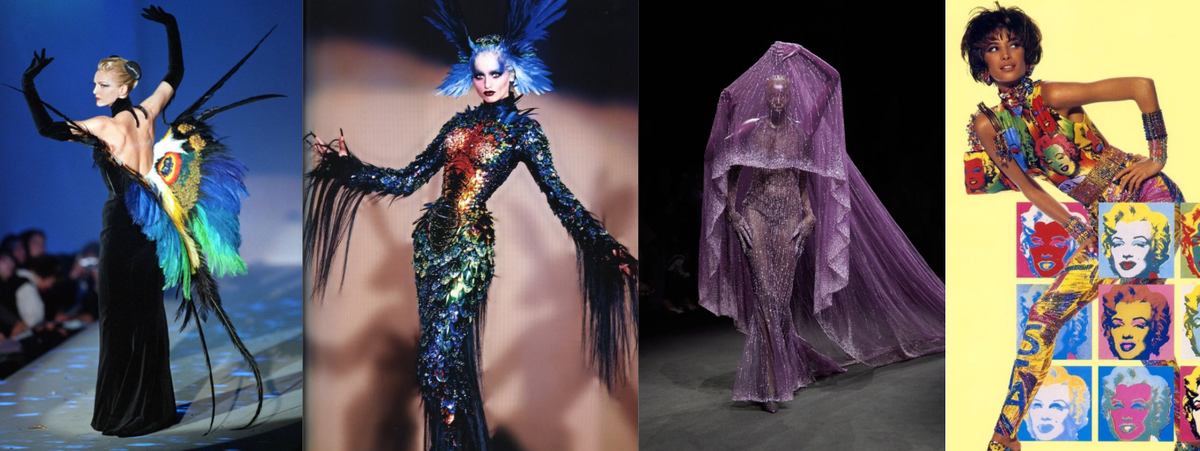
Fashion has always lived in a strange contradiction. Society accepts that a porcelain urinal by Marcel Duchamp can redefine modern art, or that a banana taped to a wall by Maurizio Cattelan can sell for astonishing sums. Yet when a couture gown requires 1,800 hours of embroidery, centuries of craftsmanship, and the imagination of an artist, many still hesitate to call it “Art.”
Why?
The question is not new. Fashion and art have walked side by side for centuries, influencing one another constantly. And yet fashion continues to struggle for legitimacy within cultural institutions that freely celebrate painting, sculpture, music, or architecture. The debate reveals more than a disagreement about aesthetics, it exposes ideas about gender, commerce, class, craftsmanship, and even what society believes art should be.
Fashion as a Language of Human Experience
Fashion is often reduced to trends or vanity, but clothing is one of humanity’s oldest forms of communication.
Before we speak, we are dressed. Fashion accompanies every stage of life: the childhood uniform, the teenage denim obsession, the leather jacket inspired by cinema icons, the carefully tailored blazer of adulthood. Clothing is tied to memory, identity, aspiration, rebellion, grief, celebration, and culture.
Unlike a painting hung on a wall, fashion lives with the body.
It moves, ages, wrinkles, transforms, and performs socially. This is what makes fashion unique: it is both intimate and public. A dress can become armor, protest, fantasy, seduction, or protection all at once.
According to fashion writer Alexander Fury, fashion reflects the tension between “the person you are and the person you want to be.” That psychological relationship is universal. Even people uninterested in fashion still participate in it every day.
Fashion is not optional in society. Art often is.
Why Fashion Has Historically Been Seen as “Less Serious”
Fashion Is Functional
One of the biggest reasons fashion has historically been excluded from “high art” is utility.
A painting exists primarily to be contemplated. Clothing exists to serve a purpose: to cover and protect the body. Historically, Western culture separated “fine arts” from “decorative” or “applied” arts. Because fashion was functional, it was often categorized alongside furniture, ceramics, or textiles rather than painting or sculpture.
But this hierarchy becomes fragile when we examine couture.
An Iris van Herpen dress sculpted through technology and hand craftsmanship can demand the same conceptual depth and technical mastery as a sculpture. Yet museums still often place fashion exhibitions under “decorative arts” rather than fully integrating them into the canon of fine art.
Fashion Is Associated With Commerce
Fashion has always existed within industry and consumption.
Critics often argue that fashion cannot be “pure art” because it is made to be sold. Yet modern art functions in exactly the same market system. Artists like Jeff Koons and Damien Hirst operate massive studios with teams of assistants, producing works for collectors and institutions.
The difference lies in perception.
Society is comfortable calling a multimillion-dollar painting “art,” but hesitates to use the same word for a couture gown displayed on a runway.
Misogyny and Cultural Bias
Fashion has long been associated with femininity, vanity, and beauty categories historically dismissed as superficial.
Alexander Fury openly identifies misogyny as part of the problem. Because fashion is often perceived as a “feminine interest,” it has traditionally been treated as less intellectual or serious than male-dominated artistic disciplines.
This prejudice extends into criticism itself. Male painters are often described as geniuses; female-centered fashion industries are frequently described as frivolous.
Yet fashion carries enormous cultural meaning. Clothing reflects politics, class, religion, gender roles, race, sexuality, and identity. To dismiss fashion as superficial is to dismiss how humans present themselves to the world.
Fashion and Art Have Always Been Connected
The idea that fashion and art are separate worlds is historically inaccurate.
Designers and artists have collaborated for generations:
- Coco Chanel worked with Pablo Picasso on costumes for the Ballets Russes.
- Elsa Schiaparelli collaborated with Salvador Dalí on the famous Lobster Dress.
- Yves Saint Laurent transformed Piet Mondrian paintings into wearable garments.
- Gianni Versace integrated Andy Warhol’s Pop Art imagery into fashion.
- Marc Jacobs collaborated with Jeff Koons for Louis Vuitton.
Fashion has never existed outside artistic conversation. It absorbs architecture, painting, cinema, literature, sculpture, music, and performance into wearable form.
The Runway as Performance Art
Some fashion presentations transcend commercial presentation and become artistic experiences.
The runway shows of Alexander McQueen remain among the strongest examples. His Spring/Summer 1999 show, where robotic arms spray-painted Shalom Harlow’s white dress live on stage, blurred the boundaries between technology, violence, beauty, and performance art.
Similarly, designers like John Galliano, Rei Kawakubo, and Pierpaolo Piccioli often create presentations closer to immersive theater than retail showcases.
Fashion, unlike static art, requires movement and a body. In this sense, it resembles performance art: the garment only fully exists when activated by the wearer.
Karl Lagerfeld and the Contradiction of Fashion
Few designers embodied the contradiction between fashion and art more than Karl Lagerfeld.
Lagerfeld famously declared:
“Art is art. Fashion is fashion.”
Yet his collections constantly referenced artistic history.
At Chanel, he drew inspiration from Chinese imperial armor, Art Deco textiles, Cubism, and porcelain motifs. His garments referenced artists like Henri Matisse and illustrators like Aubrey Beardsley.
Even while denying fashion’s equivalence to art, Lagerfeld continuously used artistic language and references to construct his collections.
Perhaps this contradiction proves how impossible it is to separate the two worlds entirely.
The Met Gala and Fashion’s Fight for Artistic Recognition
The Met Gala has become one of the clearest examples of fashion’s cultural transformation.
The 2026 theme, “Fashion Is Art,” directly challenges traditional artistic hierarchies.
Led by Andrew Bolton, the Metropolitan Museum of Art Costume Institute has spent years building the argument that fashion deserves intellectual and artistic consideration.
Exhibitions like Heavenly Bodies: Fashion and the Catholic Imagination and Camp: Notes on Fashion positioned garments not as accessories to culture, but as cultural documents themselves.
The 2026 exhibition “Costume Art” focuses on the dressed body as artistic expression, exploring categories like the Classical Body, the Aging Body, and the Pregnant Body.
This matters because fashion does something few art forms can do: it directly interacts with human identity.
The Limits of Fashion as Art
Still, the relationship between fashion and art is not always perfect.
Commercialisation Can Dilute Meaning
Sometimes artistic references in fashion become shallow marketing tools.
A painting printed onto a dress does not automatically create artistic depth. Critics argue that fashion occasionally “commercializes” art rather than meaningfully engaging with it.
True artistic dialogue happens when designers reinterpret an idea rather than simply reproducing imagery.
For example, Rahul Mishra’s Klimt-inspired couture translated the painter’s textures, gold geometry, and emotional atmosphere into embroidery and silhouette rather than literal copies.
Fashion’s Fast Pace Can Conflict With Art’s Permanence
Art is often associated with permanence and timelessness. Fashion is associated with seasons, trends, and obsolescence.
The industry’s speed can sometimes reduce garments to disposable commodities rather than meaningful creations. Fast fashion especially raises ethical questions surrounding labor, overconsumption, and environmental destruction.
This creates tension: can something designed for rapid consumption truly occupy the same cultural space as fine art?
The answer may depend on the level of craftsmanship and intention behind the work.
Accessibility vs Elitism
Fashion is democratic because everyone wears clothes.
Yet high fashion remains deeply elitist. Couture is inaccessible to most people financially, which complicates fashion’s claim to universality.
Still, even inaccessible fashion shapes culture through imagery, aspiration, and visual language, much like museums influence society even for people who never enter them.
Fashion as Living Art
Perhaps fashion’s greatest strength is precisely what critics use against it: its connection to real life.
A painting hangs on a wall. Fashion moves through cities, conversations, relationships, and memories. It ages with the body. It interacts with society in real time.
That living quality makes fashion uniquely emotional.
A couture gown can communicate fragility, power, rebellion, grief, romance, nostalgia, or fantasy before a single word is spoken.
Fashion may not need validation from the art world to possess artistic value. As Alexander Fury argues, perhaps “fashion is fashion”, and that alone is extraordinary.
But the emotional responses generated by the work of McQueen, Galliano, Kawakubo, or Lagerfeld prove one thing clearly:
Fashion is never “just clothing.”
My Thought
Personally, I think fashion became a victim of its own accessibility.
Because everyone wears clothes every day, people forget how deeply fashion shapes culture and identity. We are surrounded by it constantly, so we stop noticing its artistic power. Yet fashion can hold the same emotional weight as cinema, painting, or music. A silhouette, a fabric, or a runway show can stay in someone’s memory for decades.
At the same time, I understand why some people hesitate to call fashion “art.” Fashion is commercial. It can be superficial. It can exploit trends and references without meaning. But art itself can also become commercial, elitist, or empty. The difference often lies in intention, craftsmanship, and emotional impact.
For me, the most beautiful thing about fashion is that it lives with us. We do not simply observe it, we inhabit it. Fashion moves with the body, evolves with time, and reflects who we are or who we dream of becoming.
Maybe fashion does not need to become “fine art” to justify its value. Maybe its power comes precisely from being something else entirely: an art form we can actually live inside.
Resources:
- Vogue: the-art-of-fashion
- Met Museum: fashion-is-fashion
- Medium: the-intersection-of-fashion-and-art-a-journey-into-the-heart-of-creativity-8125a4956e05
- M.S.Rau what-does-fashion-is-art-mean
Photos: