Fashion Vocabulary: What Is Bias Cut?

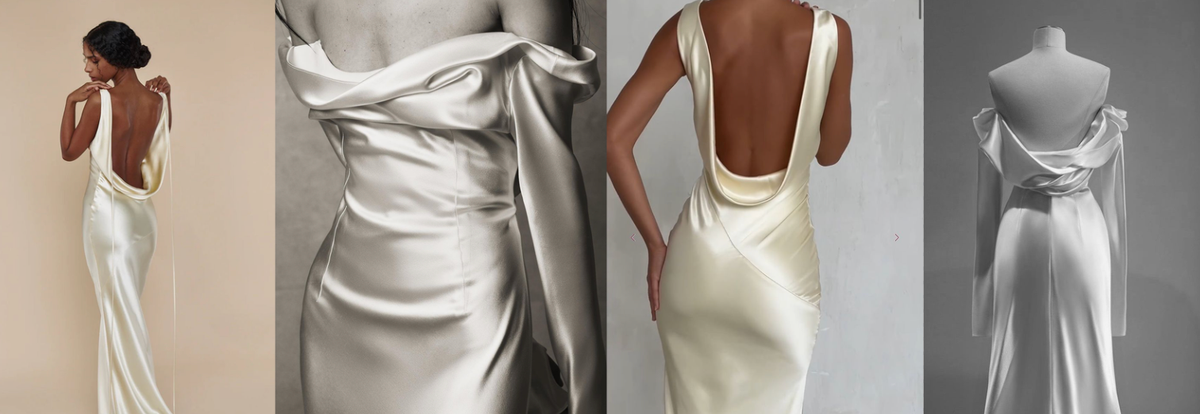
Fashion is full of technical terms that quietly shape the way garments look, move, and feel on the body. One of the most important, and most luxurious, is the bias cut. From 1930s Hollywood gowns to modern slip dresses, bias-cut garments have remained a symbol of elegance, sensuality, and craftsmanship.
But what exactly is a bias cut, and why does it make clothes feel so extraordinary?
What Is a Bias Cut?
Every woven fabric is built using two thread directions:
- Warp (lengthwise grain): runs parallel to the selvage and has very little stretch.
- Weft (crosswise grain): runs horizontally and has slightly more movement.
Most garments are cut following these straight grain lines because they provide stability and structure.
A bias cut changes everything.
Instead of cutting fabric straight, the pattern is placed diagonally at a 45-degree angle across the grain. This diagonal direction is called the bias.
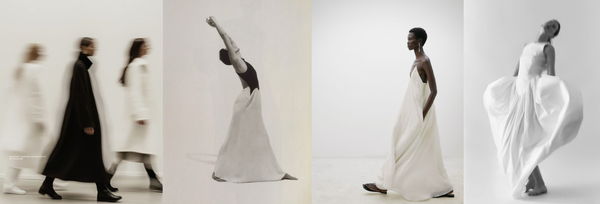
The result is a fabric that naturally stretches, drapes, and flows around the body without needing elastane or stretch fibers.
This is why bias-cut dresses seem to:
- move like liquid,
- skim the body softly,
- and feel almost like a second skin.
Why Bias Cut Matters in Fashion
Bias cutting completely transformed women’s fashion during the 1920s and 1930s thanks to French couturier Madeleine Vionnet.
Before her innovations, women’s clothing relied heavily on:
- corsets,
- boning,
- stiff tailoring,
- and rigid silhouettes.
Vionnet allowed fabric itself to create the shape.
By cutting silk on the bias, she created gowns that floated around the body with softness and movement instead of restriction.
Her designs became iconic in Hollywood, worn by stars such as:
- Jean Harlow,
- Greta Garbo,
- and Marlene Dietrich.
The bias cut quickly became associated with:
- glamour,
- sensuality,
- luxury,
- and timeless femininity.
Even today, designers like Stella McCartney, The Row, and John Galliano continue to use bias cutting as a sign of craftsmanship and refinement.
Why Bias-Cut Dresses Feel So Different
1. Natural Stretch Without Stretch Fabric
Bias-cut garments can stretch up to 15–25% more than straight-grain garments, even without spandex.
This happens because the threads shift diagonally instead of resisting movement.
The dress adapts to the body rather than forcing the body into a rigid shape.
2. Superior Drape
Bias-cut fabric falls differently.
Instead of hanging stiffly, it:
- ripples,
- flows,
- and moves fluidly with every step.
This creates the famous “liquid” effect seen in satin slip dresses and silk gowns.
3. A More Flattering Silhouette
Bias-cut garments skim the body’s curves softly instead of clinging tightly.
The result is:
- elegant movement,
- smoother lines,
- and a silhouette that feels sensual without looking forced.
It enhances the body naturally.
The Fabrics That Work Best for Bias Cut
Not every fabric behaves beautifully on the bias.
The best options are lightweight fabrics with natural fluidity, such as:
- silk charmeuse,
- satin,
- crepe de chine,
- rayon,
- lightweight jersey.
These fabrics become even more fluid and luxurious when cut diagonally.
Structured or stiff fabrics usually do not respond as well because they resist drape and movement.
Why Bias Cutting Is So Difficult
Although the concept sounds simple, bias cutting is one of the most technically demanding skills in fashion construction.
Fabric cut on the bias:
- stretches easily,
- warps during sewing,
- shifts while cutting,
- and can distort under its own weight.
A maker must understand exactly how the fabric will behave both during construction and after being worn.
This is why bias-cut garments require:
- patience,
- precision,
- hand-finishing,
- and advanced technical knowledge.
Many ateliers even allow garments to hang for 24 hours before hemming so the fabric can “drop” naturally.
Without this step, hems often become uneven.
The Hidden Cost of Bias Cut
Bias-cut garments are more expensive to produce for several reasons:
More Fabric Waste
Because pattern pieces are placed diagonally, they cannot fit together efficiently.
Bias-cut garments often require:
- 15–25% more fabricthan straight-grain garments.
More Skilled Labor
Bias-cut sewing cannot be rushed.
The maker must:
- stabilize the fabric carefully,
- avoid stretching during sewing,
- and handle every seam delicately.
This increases labor costs significantly.
Difficult Mass Production
Fast-fashion production methods do not work well with bias-cut garments.
The technique requires time and human expertise, making true bias-cut clothing more associated with luxury fashion and small-scale production.
Bias Cut vs Straight Cut
Neither method is “better” universally, they simply create different results.
Straight grain is perfect for architecture and tailoring.
Bias cut is ideal when movement, softness, and drape are the goal.
The Limits of Bias Cut
Although bias cutting is beautiful, it also has limitations.
It Can Be Difficult to Fit
Because the fabric stretches naturally, garments may continue to grow slightly over time.
Improper construction can lead to:
- twisting,
- uneven hems,
- or distortion.
Delicate Maintenance
Bias-cut garments require careful care.
They should:
- often be folded rather than hung long-term,
- handled gently during ironing,
- and washed carefully to avoid misshaping.
Not Always Practical
Bias-cut garments tend to emphasize movement and fluidity rather than structure.
For certain garments like:
- blazers,
- tailored pants,
- or architectural fashion,straight-grain construction remains more effective.
Why Bias Cut Still Feels Luxurious Today
In an era dominated by fast fashion, the bias cut represents something increasingly rare:
- patience,
- craftsmanship,
- technical mastery,
- and intentional design.
A well-made bias-cut dress does not fight the body.
It works with it.
That is why bias-cut garments continue to feel timeless nearly a century after Madeleine Vionnet revolutionized fashion.
The technique is not simply about construction.
It is about creating clothing that feels alive.
My Thought
What fascinates me most about bias cut is how something as simple as changing the angle of fabric can completely transform the emotional experience of wearing clothes.
A bias-cut garment does not just look elegant, it moves with the wearer in a deeply natural way. There is something incredibly modern about that softness and fluidity, even though the technique itself is almost a century old.
I also think bias cutting reminds us that true luxury is often invisible. Many people see a satin slip dress without realizing the extraordinary technical skill behind it. The beauty is subtle, but that subtlety is exactly what makes it timeless.
In a world of fast production and disposable trends, bias-cut fashion feels like a return to artistry, patience, and respect for craftsmanship.
Resources:
- One Addington: the-art-of-the-bias-cut
- Fabric - Fabric: what-is-bias-cut-a-fabric-guide-for-fashion-students
- Shadowline Lingerie: what-is-bias-cut
- Bradic: bias-cut-explained
Photos: