Peter Lindbergh and Natural Beauty

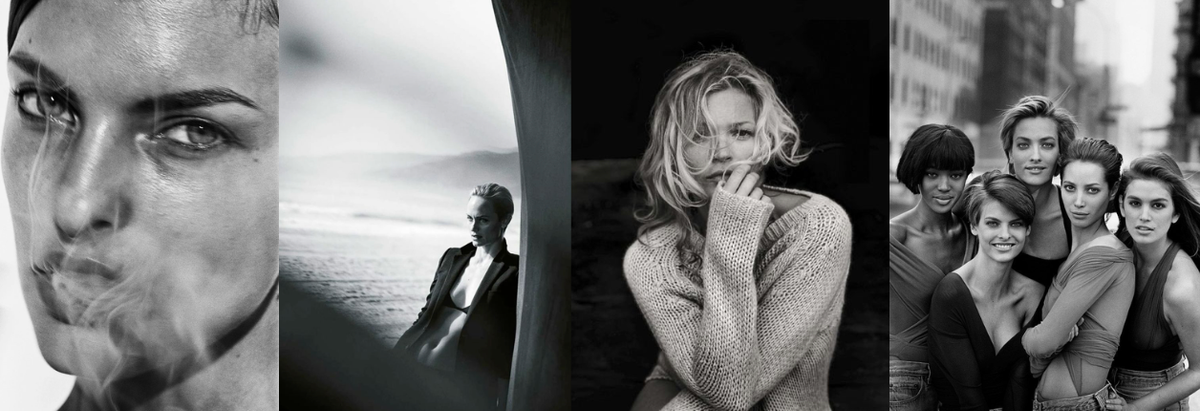
Few photographers have transformed fashion imagery as profoundly as Peter Lindbergh. At a time when fashion photography celebrated perfection, glamour, and heavily retouched beauty, Lindbergh introduced something radically different: humanity.
Through stark black-and-white portraits, cinematic storytelling, and an unwavering rejection of artificial perfection, he changed how women were represented in fashion. His photographs were not simply about clothes, they were about emotion, personality, vulnerability, and truth.
Lindbergh’s work reshaped the fashion industry during the late twentieth century and continues to influence photography, cinema, advertising, and contemporary visual culture today.
The Life and Rise of Peter Lindbergh
From Industrial Germany to the Fashion Capital of the World
Born in 1944 in Leszno, Poland, Lindbergh, originally named Peter Brodbeck, grew up in Duisburg, Germany, a harsh industrial mining city marked by factories, steel plants, and post-war reconstruction.
These landscapes would later become central to his visual identity. Unlike the luxurious studio environments associated with fashion photography, Lindbergh often preferred abandoned streets, industrial spaces, beaches, and empty urban settings.
Before becoming a photographer, he studied at the Berlin Academy of Fine Arts and was deeply inspired by painting, especially the work of Vincent van Gogh. In his early twenties, he traveled across Europe and North Africa, searching for artistic direction.
Interestingly, Lindbergh only picked up a camera relatively late in life, around the age of 27. Photography happened almost accidentally, but it quickly became the perfect medium for him because it allowed him to focus on people rather than abstraction.
By the late 1970s, he moved to Paris and began working for major fashion publications. His work for magazines like Vogue, Harper's Bazaar, and Vanity Fair soon distinguished him from every other photographer of the era.
The Birth of a New Fashion Language
Natural Beauty Against Artificial Perfection
During the 1980s and 1990s, fashion imagery was dominated by glamour, excessive makeup, polished poses, and unrealistic ideals of perfection. Lindbergh rejected this approach completely.
He believed beauty was not about flawless skin or eternal youth. For him, beauty existed in expression, character, emotion, and individuality.
One of his most famous statements perfectly summarizes his philosophy:
“This should be the responsibility of photographers today: to free women, and finally everyone, from the terror of youth and perfection.”
Rather than hiding wrinkles, tired eyes, or imperfections, Lindbergh embraced them. He often photographed women with minimal makeup and almost no retouching.
At a time when Photoshop became increasingly common, this was revolutionary. Lindbergh famously stated:
“I do everything with the camera. I never say: ‘Let’s retouch it later with Photoshop.’ This is not photography.”
His work challenged the idea that fashion photography needed to sell fantasy through artificial beauty. Instead, he introduced honesty and realism into an industry built on illusion.
The Supermodel Era
Turning Models Into Cultural Icons
One of Lindbergh’s greatest contributions was the creation of the “supermodel” phenomenon.
Before the 1990s, models were often treated simply as anonymous figures presenting clothing. Lindbergh transformed them into personalities with identity, charisma, and cultural influence.
His legendary 1990 British Vogue cover featuring Naomi Campbell, Cindy Crawford, Linda Evangelista, Christy Turlington, and Tatjana Patitz became one of the defining images of fashion history.
The image was simple, almost casual, yet incredibly powerful. It presented the models not as distant fantasy figures, but as confident women with personality and presence.
This cover helped inaugurate the supermodel era and permanently changed the relationship between fashion, celebrity culture, and media
Cinematic Storytelling in Photography
Fashion as Narrative
Lindbergh approached photography like a filmmaker. Inspired by German expressionist cinema, Italian neorealism, and directors such as Fritz Lang and Andrei Tarkovsky, he created fashion images filled with atmosphere and emotional tension.
His editorials often looked like scenes from unfinished films. Rather than simply showcasing garments, his photographs suggested stories, relationships, and emotions.
He frequently used movement, dramatic weather, industrial locations, and documentary-like spontaneity to create realism within fashion imagery.
One of his earliest narrative shoots imagined an alien arriving on Earth and falling in love with a woman, a concept considered groundbreaking at the time. The The New York Times later described it as one of the first true narrative fashion editorials.
The Power of Black and White
Why Lindbergh Rejected Colour
Black-and-white photography became Lindbergh’s signature.
For him, monochrome imagery removed distractions and allowed viewers to focus entirely on emotion, texture, expression, and humanity.
He believed color often made fashion photography look commercial or cosmetic, while black and white revealed something deeper and more honest.
His portraits emphasized skin texture, facial lines, shadows, and emotional intensity. Instead of perfection, viewers saw vulnerability and authenticity.
This timeless aesthetic also helped his work transcend trends. Even decades later, Lindbergh’s photographs still feel contemporary because they focus on emotion rather than fashion cycles.
His Relationship With Women
“A Man Who Understands Women”
Many models and actresses described Lindbergh as one of the few photographers who genuinely respected women.
Unlike photographers who controlled every pose and expression, Lindbergh preferred spontaneity. He gave very few instructions and allowed models to behave naturally.
Kate Moss once said:
“He loves women, but not in a weird sexy way.”
Amber Valletta explained that Lindbergh searched for “the soul” rather than surface beauty.
His photographs often portrayed women as strong, introspective, independent, and emotionally complex, a significant contrast to the objectified representations common in fashion media during previous decades.
The Limits and Criticism of Lindbergh’s Work
The Contradictions of “Natural Beauty”
Although Lindbergh revolutionized fashion photography, his work was not without limitations.
One major criticism is that his concept of “natural beauty” still existed within the framework of the fashion industry. Even without heavy makeup or retouching, his subjects were often internationally famous supermodels who still fit conventional standards of attractiveness.
In many ways, the industry continued to celebrate a selective version of “authenticity.” The idea of “natural beauty” sometimes became another aesthetic trend rather than a true rejection of beauty standards.
Another criticism concerns diversity. While Lindbergh collaborated with models such as Naomi Campbell, Karen Alexander, and Rachel Williams, the fashion industry of his era still lacked broader inclusivity regarding body diversity, age representation, and global perspectives.
Some critics also argue that his melancholic and serious visual style occasionally romanticized sadness and emotional distance.
Nevertheless, these criticisms do not erase his contribution. Instead, they reveal how even revolutionary artists remain shaped by the systems and periods in which they work.
Legacy and Influence
A Lasting Impact on Contemporary Fashion
Peter Lindbergh’s influence continues to shape contemporary photography and fashion imagery today.
His rejection of excessive retouching anticipated modern conversations about authenticity, mental health, aging, and unrealistic beauty standards on social media.
Many contemporary photographers now favour natural lighting, minimal editing, documentary aesthetics, and emotional storytelling, approaches Lindbergh helped popularise decades earlier.
His exhibitions, books, and retrospectives continue to attract audiences worldwide. Publications such as A Different Vision on Fashion Photography preserve his artistic philosophy and demonstrate how deeply he changed visual culture.
Even after his death in 2019, Lindbergh remains one of the most influential photographers in modern fashion history.
My Thought
What makes Peter Lindbergh fascinating to me is not only his photography, but the humanity behind it.
In an industry obsessed with perfection, he reminded people that beauty could exist in vulnerability, age, emotion, and imperfection. His photographs feel honest because they do not try too hard to impress the viewer. Instead, they make us pause and look at the person behind the image.
I also think his work feels incredibly modern today. In a world dominated by filters, AI-enhanced beauty, and social media perfection, Lindbergh’s philosophy almost feels rebellious again.
At the same time, I think it is important to recognize the limits of his vision. Even though he challenged beauty standards, fashion still remained selective and exclusive in many ways. His work opened doors, but the conversation about representation and authenticity is still continuing today.
What I admire most is probably his ability to combine strength and softness. His women looked powerful without needing artificial glamour. They looked human, and maybe that is what made them unforgettable.
Resources:
- Pro Edu: peter-lindbergh-redefining-fashion-with-authenticity-a-revolutionary-approach-to-photography
- Joe Edelman: peter-lindbergh
- Medium: peter-lindbergh-a-man-who-understands-women-and-admires-them-30d37dab5ab1
Photo: