Maison Margiela Artisanal Spring 2024 and the Return of Fashion Fantasy

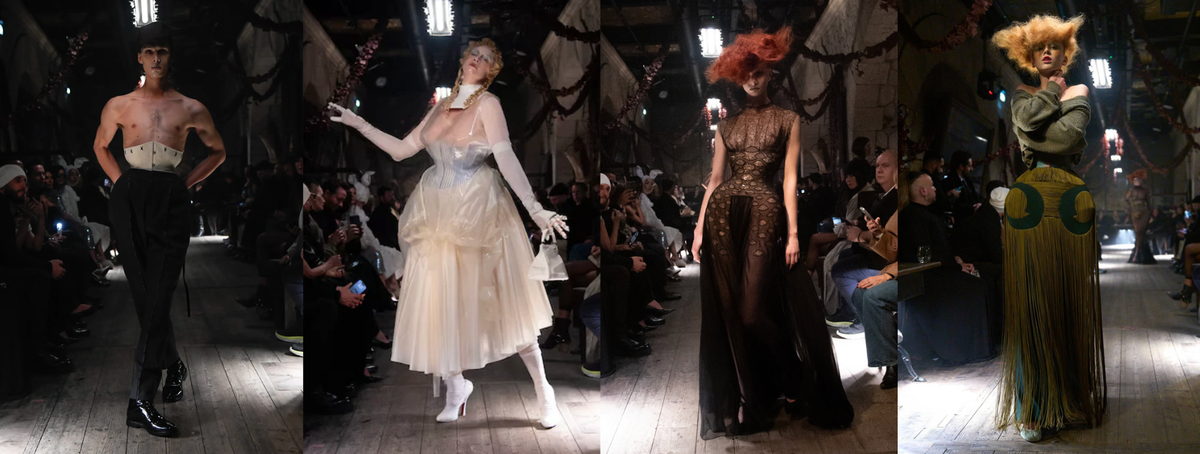
For years, fashion has been dominated by minimalism, “quiet luxury,” and commercial realism. Runways became filled with elevated basics, neutral palettes, and wearable clothes designed more for algorithms than imagination. Then came John Galliano’s Maison Margiela Artisanal Spring 2024 collection, a show that reminded the industry that fashion can still be emotional, theatrical, disturbing, and unforgettable.
Presented under the Pont Alexandre III in Paris, the collection felt less like a runway and more like stepping inside a ghostly cabaret. It was dramatic, uncomfortable, beautiful, grotesque, romantic, and deeply human all at once. More importantly, it brought fantasy back into fashion.
A Parisian Nightmare
The atmosphere of the show was essential to understanding the collection itself. Guests descended rain-soaked stairs beneath the Pont Alexandre III into what looked like a decaying Parisian speakeasy. Wooden floorboards creaked beneath café tables cluttered with empty bottles and glasses. Thunder echoed during the wait for the show to begin while antique mirrors flickered into life like haunted cinema screens.
Before the runway started, viewers watched a short noir-inspired film showing corset tightening, jewel theft, desire, and obsession. The audience was not simply watching clothes, they were entering Galliano’s world.
Inspired by the photography of Brassaï and the paintings of Kees van Dongen, Galliano explored the underbelly of Paris nightlife: intoxicated dreamers, lonely outsiders, cabaret women, and desperate men wandering through the darkness.
This immersive storytelling is something modern fashion rarely attempts anymore.
The silhouettes were arguably the most striking element of the collection.
Corsets sculpted bodies into impossible hourglass shapes. Nude corsetry appeared beneath sheer black tulle dresses, exposing the structure of the garments instead of hiding it. Tailored suits transformed into exaggerated feminine forms with rounded hips, cinched waists, and ballooning sleeves.
Some models appeared fragile and distorted, almost like broken porcelain dolls. Others moved like exhausted cabaret performers at the end of a long night.
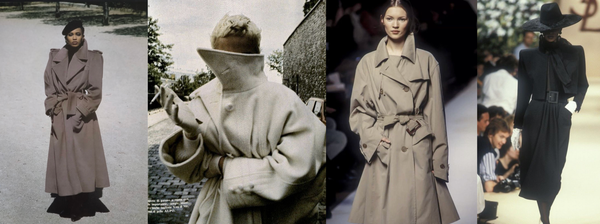
One of the standout pieces was a beige pleated coat resembling weathered cardboard. Its dramatic kimono sleeves expanded like panniers when the model lifted her arms, creating a surreal sculptural effect.
Galliano used clothing not to flatter the body traditionally, but to create characters and emotional tension.
Galliano Meets Margiela
Although the collection was unmistakably Galliano, it still remained deeply rooted in the DNA of Maison Margiela.
Classic Margiela signatures appeared throughout the collection:
- Visible seams instead of hidden construction
- Raw unfinished hems
- Deconstructed tailoring
- Painted fabrics and illusion techniques
- Iconic tabi shoes paired with white stockings
The collection merged Galliano’s love for theatrical storytelling with Margiela’s conceptual approach to craftsmanship.
This balance is important because Galliano did not erase Margiela’s identity, he expanded it.
Couture as Art and Experimentation
One of the reasons the show received such overwhelming praise was because it treated couture as experimentation again.
Galliano and the Maison developed numerous techniques for the collection:
- Boiling and glueing fabrics
- Intricate thread work
- Illusionistic textures
- Transparent organza layering
- Painted stockings mimicking exposed flesh and shadows
The show introduced what Galliano called “emotional cutting,” where garments reflect unconscious gestures:
- A coat pulled tightly against rain
- A lapel raised to hide the face
- Trousers lifted to avoid puddles
Instead of creating clothes that simply looked beautiful, Galliano created garments that carried emotional memory and physical behavior.
This returned couture to its original purpose: artistic research and innovation.
The Return of Fashion Fantasy
Perhaps the most important aspect of the collection was its rejection of realism.
Modern luxury fashion often prioritizes:
- Wearability
- Commercial appeal
- Social media trends
- Minimalism
- Safe branding
Galliano rejected all of this.
Instead, he embraced:
- Darkness
- Decay
- Melodrama
- Fantasy
- Grotesque beauty
- Emotional discomfort
The models looked like tragic characters from a forgotten Parisian novel. Their smeared makeup resembled cracked porcelain dolls. Transparent dresses exposed bodies like fragile ghosts. Men appeared soaked from rain and exhausted by hunger.
The collection reminded audiences that fashion can evoke emotions beyond aspiration and positivity. It can also explore fear, sadness, loneliness, desire, obsession, and decay.
This emotional complexity is something many critics feel contemporary fashion has lost.
Cultural and Artistic References
The collection referenced multiple artistic and literary influences:
- Belle Époque Paris
- Film noir cinema
- Victorian mourning aesthetics
- Cabaret culture
- Charles Baudelaire and his fascination with beauty in decay
- The paintings of Toulouse-Lautrec
- The photography of Brassaï
The atmosphere echoed Baudelaire’s fascination with death, desire, and urban darkness. The show felt almost like a living poem or theatrical performance rather than a commercial presentation.
Galliano proved that fashion can still engage with literature, art history, and cultural storytelling in a meaningful way.
The Limits and Criticism of the Collection
Even though the collection was widely celebrated, it is important to discuss its limitations and controversies.
Extreme Body Shapes
The exaggerated corseted silhouettes raised concerns about body image and physical restriction. Some viewers felt the tiny waists and distorted proportions romanticized unhealthy beauty standards.
Others argued that because the collection existed within couture fantasy rather than ready-to-wear reality, the silhouettes functioned more as artistic expression than wearable ideals.
Fashion Versus Wearability
Many garments were impractical and impossible for everyday life. Critics of high fashion often question whether collections like this disconnect fashion from ordinary people.
However, couture has historically existed as a laboratory for creativity rather than practicality.
The Risk of Nostalgia
Some critics also argued that modern fashion continuously romanticizes the past instead of imagining the future. Galliano’s dark Parisian fantasy draws heavily from Belle Époque aesthetics and historical references.
The question becomes:Can fashion move forward creatively while still looking backward aesthetically?
Commercial Reality
Shows like this generate enormous cultural impact but are expensive, highly exclusive, and inaccessible to most people. While audiences celebrated the fantasy, luxury fashion still remains deeply tied to exclusivity and elitism.
Why the Collection Matters
Maison Margiela Artisanal Spring 2024 became more than a fashion show, it became a cultural moment.
At a time when fashion increasingly feels optimized for commerce, social media, and quiet luxury minimalism, Galliano reminded audiences that fashion can still:
- Tell stories
- Create fantasy
- Challenge viewers emotionally
- Experiment artistically
- Disturb and fascinate simultaneously
The collection reignited conversations about the purpose of fashion itself.
Should fashion simply sell clothes?Or should it also create dreams?
Galliano answered that question clearly.
My Thought
Personally, I think this collection was important because it reminded people why fashion matters beyond trends and products. Today, many brands are obsessed with creating clothes that are safe, minimal, and instantly marketable. While there is nothing wrong with simplicity, fashion loses something when it becomes too realistic and predictable.
What made Galliano’s show so powerful was not only the craftsmanship, but the emotions it created. The collection felt uncomfortable, melancholic, dramatic, and beautiful at the same time. It proved that fashion can still behave like art and storytelling instead of just luxury merchandising.
At the same time, I also understand the criticisms. Some silhouettes were extreme, and the romanticization of suffering or distorted beauty can be problematic if people interpret it too literally. Fashion fantasy should still be approached critically.
But overall, I believe the show succeeded because it dared to create something memorable in an era where many collections are instantly forgotten. Galliano reminded the industry that fantasy, darkness, and emotion still have a place in fashion.
Resources:
- Behind the blind: maison-margiela-haute-couture-ss24
- WWD: review
- Vogue: maison-martin-margiela
- NSS Magazine: maison-margiela-galliano-couture-2024
Photos: