History of Denim & the Origin of Jeans

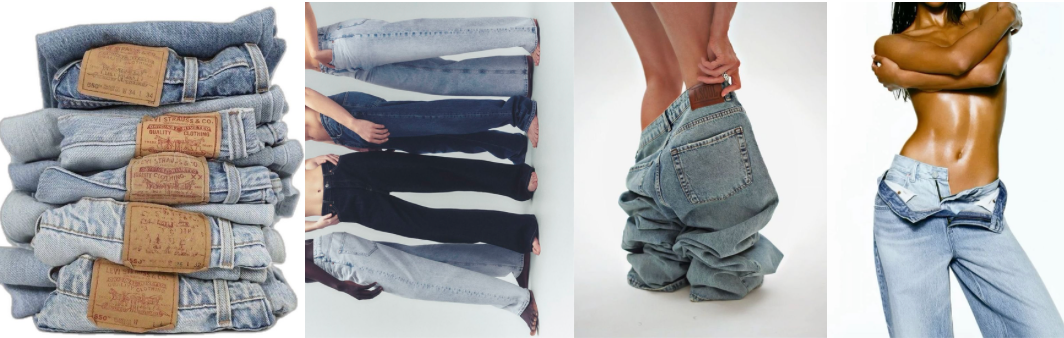
Denim jeans have become an essential part of everyday life. Worn across continents, cultures, and generations, they are one of the few garments that truly transcend gender, age, and social class. Despite constant innovation in textiles, denim remains one of the most durable and versatile fabrics in fashion.
Yet behind this everyday item lies a rich history shaped by craftsmanship, industrial innovation, cultural movements, and global trade. From workwear to rebellion, from luxury to sustainability debates, denim continues to evolve.
The Birth of Denim
The origins of denim are widely linked to the French city of Nîmes. There, weavers attempting to recreate a durable fabric known as “jeane” accidentally developed a new textile: serge de Nîmes, meaning “twill from Nîmes.”
Denim’s structure is what makes it unique:
- A twill weave, where the weft thread passes under multiple warp threads
- A diagonal rib pattern, increasing durability
- Warp threads dyed blue and weft threads left white
This construction gave denim its signature appearance: blue on the outside, white on the inside.
Indigo
The iconic blue color of denim comes from indigo dye, one of the oldest dyes in textile history.
- Originally derived from the plant Indigofera tinctoria
- First exported from India during the Greco-Roman era
- Considered a luxury due to rarity and heavy taxation
A major turning point came when Adolf von Baeyer synthesized indigo in 1883, leading to industrial production by 1897. This made denim more affordable and consistent.
Unlike other dyes, indigo coats only the surface of fibers. This is why jeans fade over time, revealing lighter tones underneath, a key part of denim’s aesthetic appeal.
The Birth of Jeans
The modern jean was born in the United States during the Gold Rush.
- In 1853, Levi Strauss moved to San Francisco to sell dry goods
- Tailor Jacob Davis used Strauss’s denim to create durable trousers
- Davis reinforced stress points with metal rivets
Together, they patented this innovation on May 20, 1873, marking the official birth of blue jeans.
Originally called “waist overalls,” these garments were designed for miners and laborers who needed strength and durability.
Denim as Workwear
In the early 1900s, denim became the uniform of:
- Cowboys
- Miners
- Farmers
- Railroad workers
Its advantages were clear:
- Stronger than wool or canvas
- Affordable
- Practical (indigo hid dirt)
At this stage, denim was purely functional, far from the fashion item it would become.
The American West
Denim became deeply tied to the mythology of the American West. Cowboys and ranch workers embodied rugged individualism, and jeans became part of that identity.
By the 1930s, “dude ranches” introduced jeans to wealthy Eastern tourists, helping spread their popularity beyond workers.
War & Transition
During World War II:
- Denim production decreased due to material shortages
- Jeans were classified as essential goods
After the war, American soldiers brought denim abroad. This exposure helped transform jeans from workwear into casual, leisure clothing.
The 1950s
The 1950s marked a cultural turning point.
Actors like:
- James Dean (Rebel Without a Cause)
- Marlon Brando (The Wild One)
- Marilyn Monroe
…turned jeans into symbols of rebellion, sexuality, and youth identity.
Jeans were even banned in some schools and public places due to their association with delinquency.
Counterculture & Self-Expression
Denim became a symbol of:
- Protest movements
- Anti-establishment values
- Individuality
Key trends:
- Bell-bottom jeans
- Customised denim (embroidery, paint, patches)
- Gender-fluid fashion choices
Denim evolved into a canvas for self-expression.
From Luxury to Streetwear
- 1980s: Designer Denim
- Brands like Calvin Klein and Armani introduced premium jeans
- New treatments like acid wash and stonewash appeared
- Denim entered high fashion
- 1990s: Hip-Hop Influence
- Baggy jeans and oversized silhouettes
- Popularised by artists and groups like TLC and the Spice Girls
- Denim became central to global streetwear culture
Diversity & Revival
Modern denim reflects all past influences:
- Skinny jeans (2000s–2010s)
- High-waisted and vintage cuts
- Raw and selvedge denim revival
At the same time, sustainability has become a major concern, pushing brands toward:
- Recycled denim
- Organic cotton
- Water-saving technologies
The Limits of Denim
Despite its popularity, denim has significant drawbacks:
- Environmental Impact
- ~7,500 litres of water per pair of jeans
- Chemical pollution from dyeing processes
- Difficulty in recycling mixed-fiber garments
- Overconsumption
- Fast fashion encourages short product lifespans
- Cheap jeans contradict denim’s original durability
- Fit & Production Issues
- “Perfect fit” remains difficult to achieve
- Complex sizing leads to repeated purchases
These challenges highlight the need for innovation and responsible consumption.
The Future of Denim
The denim industry is shifting toward sustainability:
- Waterless dyeing technologies
- Recycling systems
- Circular fashion models
Brands are now expected to combine:
- Style
- Durability
- Environmental responsibility
The future of denim may be green in production, but timeless in design.
Denim Facts
- One bale of cotton can produce ~325 pairs of jeans
- Jeans were originally called “waist overalls”
- The small pocket was designed for pocket watches
- Orange stitching matches original copper rivets
- Jeans became popular globally thanks to off-duty soldiers
My Thought
What fascinates me most about denim is how it reflects society. It started as a practical solution for workers, then became a symbol of rebellion, and today it sits at the center of both fashion and sustainability debates.
To me, denim represents contradiction: it is both timeless and constantly evolving, both accessible and environmentally costly. This duality is what makes it so powerful.
In the future, I believe denim will not disappear, but it will need to reinvent itself responsibly. The challenge is no longer just to create beautiful jeans, but to create them ethically and sustainably.
Resources:
- Hawthorn: history-of-denim
- Wikipedia: Denim
- The Conversation: a-brief-history-of-denim-and-why-the-perfect-pair-of-jeans-remains-elusive-276118
- Makethedot: the-history-and-cultural-transformation-of-denim-in-modern-fashion
Photos: