The History of Milan Fashion Week
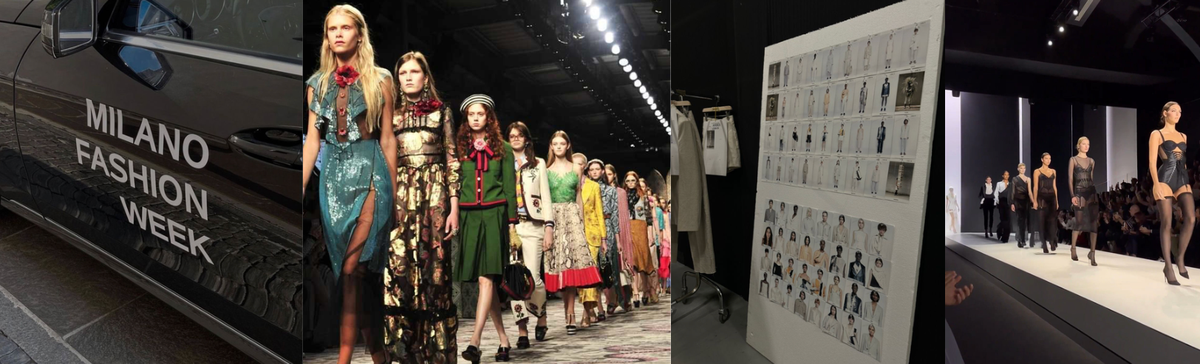
Today, Milan Fashion Week stands as one of the most influential fashion events in the world alongside Paris Fashion Week, New York Fashion Week, and London Fashion Week. Known for its unapologetic glamour, luxurious craftsmanship, and sensual energy, Milan has built a reputation unlike any other fashion capital.
But Italy’s rise to fashion dominance did not happen overnight. Before Milan became synonymous with supermodels, Versace excess, and Prada minimalism, Italian fashion was deeply regional, shaped by centuries of local craftsmanship, textile traditions, and artisan culture. The story of Milan Fashion Week is therefore not just about fashion, it is also about post-war Italy rebuilding itself into a global luxury powerhouse.
The Birth of Italian Fashion
- Italy’s Regional Fashion Identity
For centuries, Italian fashion existed on a local level. Different cities specialized in different crafts and fabrics:
- Florence became known for textiles and tailoring
- Como specialized in silk
- Prato developed wool and fabric recycling
- Venice cultivated luxury craftsmanship
- Rome became associated with couture and aristocratic elegance
This fragmented but highly skilled system would later become the foundation of the “Made in Italy” identity.
After the Second World War, Italy faced economic devastation. However, one industry that survived was textiles and craftsmanship. Italian artisans still possessed generations of knowledge in weaving, leatherworking, embroidery, and tailoring.
That survival became Italy’s opportunity.
Florence, The Original Capital of Italian Fashion
- Giovanni Battista Giorgini’s Revolutionary Vision
The true beginning of modern Italian fashion started in Florence thanks to businessman Giovanni Battista Giorgini.
On February 12, 1951, Giorgini organized the first Italian high-fashion show inside his private residence, Villa Torrigiani. Designers included:
- Emilio Pucci
- Fontana Sisters
- Simonetta Colonna Di Cesarò
- Emilio Schuberth
The event attracted American buyers and journalists from stores such as Bergdorf Goodman and Saks Fifth Avenue.
A year later, the shows moved to the famous Sala Bianca at Palazzo Pitti, helping connect Italian fashion to Italy’s artistic heritage.
Florence quickly became the center of Italian fashion during the 1950s and 1960s.
Rome, Cinema, and the Rise of Italian Glamour
- Fashion Meets Hollywood
While Florence dominated couture presentations, Rome became the glamorous cinematic face of Italian fashion.
The famous Cinecittà Studios attracted international productions and stars, while designers dressed celebrities including:
- Audrey Hepburn
- Elizabeth Taylor
Italian director Federico Fellini further shaped the global fantasy of Italian elegance with La Dolce Vita. The film popularized the image of sensual Italian glamour and helped immortalize the little black dress.
Fashion was no longer only about clothing, it became lifestyle, fantasy, and celebrity culture.
Why Milan Won the Fashion Battle
- Industry, Business, and Ready-to-Wear
Although Florence was initially the fashion capital, Milan slowly emerged as the stronger long-term candidate.
Why?
Because Milan combined:
- industrial power
- manufacturing networks
- publishing influence
- textile innovation
- business infrastructure
In 1958, the Camera Nazionale della Moda Italiana (CNMI) was established to promote Italian fashion globally.
Milan also became home to:
- textile innovators like Missoni and Etro
- fashion publishing, including Vogue Italia in 1961
- large-scale ready-to-wear production
As fashion shifted away from exclusive couture toward prêt-à-porter, Milan became the ideal city for scalable luxury.
Walter Albini and the Birth of Modern Ready-to-Wear
- The Designer Who Changed Italian Fashion
One of the most important yet often overlooked figures in Milan’s rise was Walter Albini.
In 1971, Albini abandoned Florence and presented his collection in Milan at the Circolo del Giardino. This moment is considered revolutionary because he introduced the concept of the “total look”, presenting coordinated garments under one creative vision.
Albini:
- embraced ready-to-wear fashion
- collaborated with industrial producers
- experimented with unisex silhouettes
- turned fashion shows into performances
His work marked the transition from couture to modern fashion systems.
By 1975, Milan officially launched its first true Fashion Week format.
The Golden Age: Armani, Versace, and the 1980s Explosion
- Milan Becomes a Global Fashion Capital
The 1980s transformed Milan Fashion Week into a worldwide phenomenon.
The city became synonymous with:
- power dressing
- luxury excess
- theatrical catwalks
- celebrity culture
Key designers dominated the era:
- Giorgio Armani
- Gianni Versace
- Moschino
- Dolce & Gabbana
- Prada
- Fendi
Milan Fashion Week, then called “Milano Collezioni”, became increasingly theatrical and glamorous.
The Supermodel Era and Fashion Spectacle
- Versace’s Legendary 1991 Show
If one moment defines Milan Fashion Week’s mythology, it is undoubtedly Gianni Versace’s 1991 runway show.
Supermodels:
- Cindy Crawford
- Naomi Campbell
- Christy Turlington
- Linda Evangelista
walked the runway lip-syncing to Freedom! '90 by George Michael.
It was fashion, celebrity culture, music, and spectacle merging together into one unforgettable moment.
The era helped create the modern supermodel phenomenon and turned Milan Fashion Week into global entertainment.
Tom Ford’s Gucci Revolution
- Saving Gucci Through Sex Appeal
When Tom Ford joined Gucci in 1990, the brand was struggling financially.
Everything changed with his Autumn/Winter 1995 collection.
The collection featured:
- velvet suits
- jewel-toned satin shirts
- sensual tailoring
- provocative glamour
The result was immediate: Gucci sales reportedly increased by 90% between 1995 and 1996.
Tom Ford’s Gucci defined the sexy minimalism of the 1990s and helped Milan dominate the global luxury conversation.
Tragedy and Reinvention
- The Death of Gianni Versace
In 1997, the fashion world was shaken by the murder of Gianni Versace in Miami.
His sister, Donatella Versace, took over the brand only months later.
Her first show after his death was emotional and symbolic, attended by fashion figures including:
- Karl Lagerfeld
- Giorgio Armani
The moment marked the end of one era and the beginning of another for Milan Fashion Week.
Milan Fashion Week Today
- Tradition Meets Pop Culture
Today, Milan Fashion Week continues balancing heritage with reinvention.
Modern Milan includes:
- Miuccia Prada’s intellectual minimalism
- Alessandro Michele’s maximalist Gucci era
- Jeremy Scott’s pop-culture-driven Moschino
- ongoing Versace glamour under Donatella Versace
Milan Fashion Week now hosts more than 40 shows every season and transforms the city into a global luxury hub.
Major venues include:
- Palazzo Reale
- Palazzo Serbelloni
- Castello Sforzesco
The Limits and Criticism of Milan Fashion Week
Sustainability and Exclusivity
Despite its glamour, Milan Fashion Week has also faced criticism.
- Sustainability Issues
Luxury fashion has long been criticized for:
- overproduction
- pollution
- toxic chemicals
- waste
In 2014, Greenpeace protested during Milan Fashion Week demanding “toxic-free fashion,” specifically criticising Versace for hazardous chemicals in production.
Lack of Inclusivity
Historically, Milan Fashion Week has also been criticized for:
- limited racial diversity
- narrow beauty standards
- exclusivity and elitism
Although representation has improved over recent years, many critics argue the industry still has a long way to go.
Commercial Pressure
Another criticism is that Milan increasingly prioritizes commercial success over creativity. As luxury conglomerates dominate the industry, smaller independent designers often struggle for visibility.
Even so, Milan remains one of the most influential fashion platforms in the world.
Conclusion
From Florence’s aristocratic salons to Milan’s supermodel spectacles, the history of Milan Fashion Week reflects the evolution of Italian fashion itself.
What made Milan unique was its ability to unite:
- craftsmanship
- industrial innovation
- celebrity culture
- sensuality
- business
Unlike Paris, which often prioritises haute couture fantasy, Milan built its empire through wearable luxury and powerful branding.
The city transformed fashion from an elite craft into a global lifestyle phenomenon and in doing so, created one of the most glamorous fashion weeks in history.
My Thought
What I personally find most interesting about Milan Fashion Week is how it constantly balances opposites. It is glamorous but industrial, artistic but commercial, sensual but intellectual. Milan never tried to imitate Paris, instead, it created its own language of fashion based on confidence, luxury, and modernity.
I also think Milan’s history proves that fashion is never just about clothes. It reflects economics, politics, feminism, celebrity culture, and even technological change. From the rise of prêt-à-porter in the 1970s to the digital fashion weeks during COVID-19, Milan Fashion Week has continuously adapted to the world around it.
At the same time, the industry still faces important challenges regarding sustainability, inclusivity, and overconsumption. The glamour is undeniable, but it’s equally important to question the systems behind it. That tension is perhaps what makes Milan Fashion Week so fascinating today.
Resources:
- Vogue: history-of-milan-fashion-week
- Wikipedia: Milan_Fashion_Week
- NSS Magazine: mithridate-aw26-tate-britain-london-daniel-fletcher
Photos: