The Language of Embroidery in Haute Couture

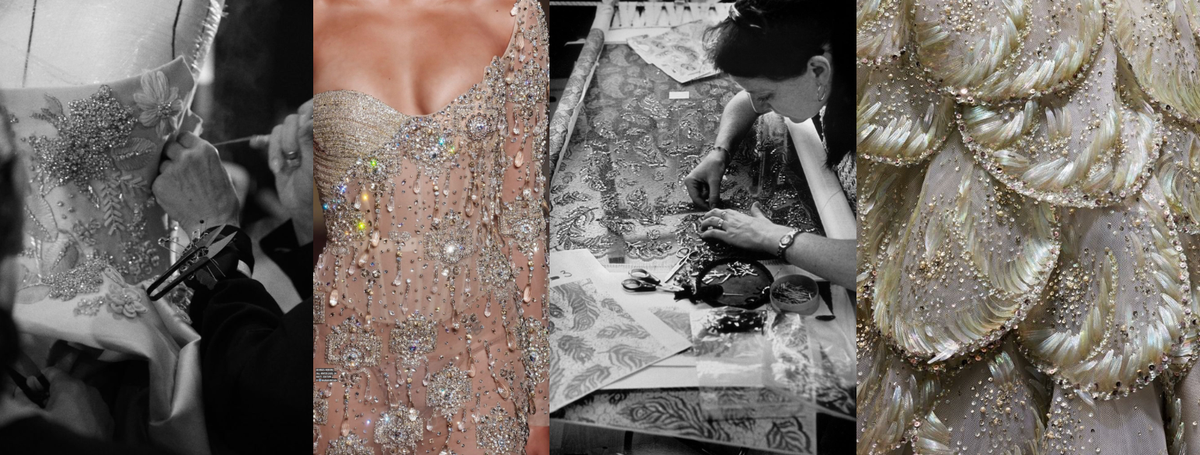
Fashion has always been more than clothing. In haute couture, garments become narratives, carrying memories, identities, and cultural symbolism through every stitch. Among the many couture techniques that communicate these hidden messages, embroidery remains one of the most powerful. From ancient imperial robes to modern runway masterpieces, embroidery transforms fabric into storytelling.
Today, luxury fashion houses continue to use handcrafted embellishment not only as decoration, but as a language, one capable of expressing heritage, spirituality, femininity, rebellion, and personal identity. Through beads, sequins, goldwork, and intricate motifs, embroidery allows couture to exist somewhere between fashion and art.
The Historical Origins of Symbolic Embroidery
Embroidery has served as a visual language for centuries across civilisations. Long before fashion became seasonal or commercial, embroidered symbols communicated power, religion, and social hierarchy.
In imperial China, dragons embroidered onto robes represented strength, authority, and divine power. These motifs were reserved almost exclusively for the emperor. In medieval Europe, garments were adorned with crosses, angels, and biblical imagery to symbolize devotion and spirituality. Across India, Persia, and the Ottoman Empire, embroidery also reflected wealth, family lineage, and regional identity.
What makes embroidery fascinating is that every motif carried meaning. Placement, color, material, and technique all contributed to the message behind a garment. Couture inherited this tradition, transforming embroidery into a modern form of storytelling.
Embroidery as Storytelling in Modern Haute Couture
Contemporary designers frequently reinterpret historical symbolism through modern aesthetics. Embroidery in couture today often explores themes such as identity, memory, femininity, nature, mortality, and cultural heritage.
Dolce & Gabbana: Religion and Sicilian Heritage
Dolce & Gabbana frequently incorporates Catholic iconography and Sicilian cultural references into its Alta Moda collections. Sacred hearts, Madonnas, baroque florals, and gold embellishments create garments that feel deeply rooted in Italian history and spirituality.
Their embroidery does not simply decorate dresses; it creates emotional and cultural narratives. Through handcrafted embellishment, the designers celebrate family traditions, religious rituals, and Mediterranean identity.
Alexander McQueen: Nature, Death, and Rebirth
Alexander McQueen approached embroidery with a darker and more theatrical perspective. In collections such as Savage Beauty, motifs like skulls, butterflies, flowers, and birds became symbolic explorations of mortality and transformation.
McQueen used embroidery almost psychologically. His garments often balanced beauty with discomfort, questioning the relationship between fragility and power.
Chanel and the Preservation of Craftsmanship
Chanel continuously celebrates embroidery through its Métiers d’Art collections, dedicated to preserving artisan craftsmanship. These collections highlight the work of embroidery ateliers such as Montex, Lesage, and Lemarié.
By combining traditional embroidery techniques with modern silhouettes, Chanel demonstrates how couture can evolve without losing its artisanal roots.
Luneville Embroidery: The Couture Technique Behind the Magic
Among the most prestigious embroidery techniques in haute couture is Luneville embroidery, a French method using a small hook to attach beads, sequins, and threads from the underside of fabric.
This technique became central to couture because it allows artisans to create highly detailed embellishments with extraordinary fluidity and texture.
Why Fashion Houses Love Luneville Embroidery
Luneville embroidery creates movement, light reflection, and dimension that machine embroidery cannot fully replicate. It transforms garments into living surfaces.
Chanel: Tradition Meets Modernity
In Chanel’s 2023/24 Métiers d’Art collection, Atelier Montex used Luneville embroidery alongside traditional needlework and Cornely machine techniques. Richly embroidered jackets and dresses featured sequined motifs and intricate beadwork that added depth to classic Chanel silhouettes.
Dior: Embroidery as Narrative
Under the direction of Maria Grazia Chiuri, Dior used Luneville embroidery in its Spring/Summer 2023 Haute Couture collection to reinterpret ancient Greek garments.
Nature-inspired motifs, mythological references, and delicate beadwork transformed the dresses into storytelling objects, blending classical history with contemporary femininity.
Elie Saab: Couture Opulence
Elie Saab is known for spectacular embellished gowns, and Luneville embroidery plays a major role in his aesthetic. His Spring/Summer 2025 collection featured fern motifs, micro leopard patterns, raffia textures, and heavily embroidered tulle gowns inspired by the African savannah.
The result was a collection balancing glamour with organic inspiration.
The Major Embroidery Techniques in Couture
Different embroidery methods create different visual and symbolic effects.
Surface Embroidery
This technique stitches directly onto fabric using satin stitch, chain stitch, and French knots. It allows highly intricate symbolic patterns and detailed storytelling.
Tambour Embroidery
Tambour embroidery uses a hook to create chain stitches rapidly, often incorporating beads and sequins. It is widely used in haute couture because of its luxurious finish and efficiency.
Goldwork
Goldwork embroidery uses metallic threads to create rich, regal embellishments. Historically associated with royalty and religious garments, it still symbolizes prestige and grandeur today.
Appliqué
Appliqué layers pieces of fabric onto a garment to create dimension and texture. Couture houses often use this method to create floral motifs, abstract imagery, or sculptural effects.
Each technique requires immense patience and precision. Some couture garments take hundreds or even thousands of hours to complete.
The Limits and Criticism of Embroidery in Haute Couture
Although couture embroidery is celebrated for its artistry, there are also important conversations surrounding its limitations and contradictions.
The Question of Accessibility
Haute couture embroidery requires extraordinary labor and craftsmanship, which makes these garments extremely expensive. Many couture pieces are inaccessible to most people, reinforcing fashion’s association with exclusivity and wealth.
Craftsmanship Versus Commercialisation
As luxury fashion becomes increasingly commercialized, some critics argue that craftsmanship risks becoming a marketing tool rather than a genuine artistic practice. Certain brands promote “handmade” narratives while simultaneously producing at industrial scales.
Cultural Appropriation
Because embroidery often draws from traditional cultural symbols, some fashion houses have faced criticism for borrowing motifs without fully respecting or crediting their origins. Sacred symbols and indigenous techniques can sometimes be aestheticized without cultural understanding.
The Decline of Artisan Training
Embroidery ateliers require years of training, but fewer young artisans are entering these professions. Couture houses continue to preserve these crafts, yet the future of certain embroidery techniques remains uncertain.
These conversations are important because they reveal that embroidery is not only beautiful, it is also connected to labor, heritage, economics, and cultural ethics.
Personalisation and Emotional Connection
One of embroidery’s most intimate qualities is personalisation. Couture clients often commission monograms, family symbols, meaningful flowers, or personal motifs embroidered directly into garments.
This transforms clothing into emotional objects rather than disposable fashion.
In a world dominated by fast fashion and mass production, personalised embroidery reintroduces individuality and emotional attachment into clothing.
My Thought
What fascinates me most about embroidery in haute couture is that it slows fashion down. In an industry obsessed with speed, trends, and instant visibility, embroidery reminds us that true craftsmanship takes time.
Every embroidered couture piece contains invisible labor, patience, and emotion. Behind the sequins and crystals are artisans spending hundreds of hours creating something deeply human by hand.
I also think embroidery changes the way we see fashion itself. A garment stops being just clothing and becomes memory, symbolism, and storytelling. Whether it is Dolce & Gabbana celebrating Sicilian identity, McQueen exploring mortality, or Guo Pei preserving cultural heritage, embroidery allows fashion to communicate beyond aesthetics.
At the same time, it is important to acknowledge the contradictions within couture: exclusivity, accessibility issues, and the risk of reducing cultural craftsmanship to luxury marketing. These conversations matter because they shape the future of artisanal fashion.
Ultimately, embroidery proves that fashion can still be art, not only because of how it looks, but because of the stories hidden inside every stitch.
Ressources:
- Fygmnt: the-hidden-language-of-couture-decoding-symbols-in-handcrafted-fashion
- Embellishment : luneville-embroidery-in-haute-couture
- M+ Magazin: guo-pei-in-conversation-fashion-runway-design
Photos: