What “Made in Italy” Really Means

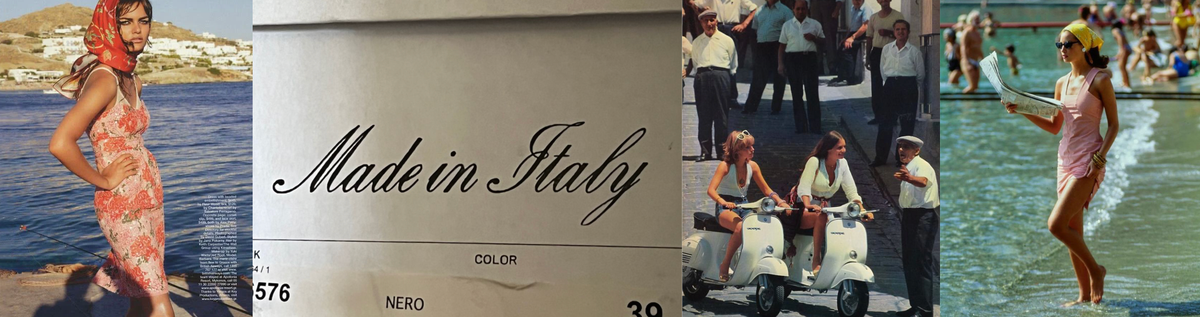
For decades, the phrase “Made in Italy” has represented far more than a simple manufacturing label. It evokes images of handcrafted leather bags from Tuscany, precision tailoring from Milan, luxurious furniture, artisan pasta, sports cars, and a lifestyle rooted in beauty, craftsmanship, and culture.
But what does “Made in Italy” actually mean? Is it simply about where a product is assembled, or is it something deeper a philosophy of production, identity, and creativity?
Today, “Made in Italy” is one of the most recognized labels in the world, associated with luxury, quality, elegance, and innovation. Yet behind the glamour lies a complex reality involving strict regulations, industrial districts, sustainability challenges, counterfeiting, and debates about authenticity.
The Origins of Made in Italy
A Legacy Born During the Renaissance
The roots of Made in Italy can be traced back to Renaissance Italy, when cities such as Florence, Venice, and Milan became centers of art, craftsmanship, science, and trade.
Italian artisans developed a unique approach that combined:
- Technical skill
- Aesthetic beauty
- Material knowledge
- Creativity and experimentation
This fusion created a productive culture where objects were not only functional but also beautiful. The influence of figures such as Leonardo da Vinci perfectly reflects this philosophy: art and engineering working together.
Centuries later, after World War II, Italy transformed this artistic heritage into a modern industrial system. Small workshops evolved into global businesses, and sectors such as fashion, furniture, automobiles, and food became international symbols of Italian excellence.
The “Four As” The Foundations of Made in Italy
Traditionally, Made in Italy has been associated with four major industries, often called the “Four As”:
- Abbigliamento: Fashion and clothing
- Agroalimentare: Food and wine
- Arredamento: Furniture and interior design
- Automobili: Automobiles and mechanical engineering
Over time, this evolved into the “5 As,” adding:
- Automation: Industrial machinery and advanced manufacturing systems
These sectors helped Italy establish a global reputation for:
- High-quality manufacturing
- Sophisticated design
- Durability
- Specialized craftsmanship
- Strong regional identity
Italian products became associated with refinement and individuality in a world increasingly dominated by mass production.
Why “Made in Italy” Became So Powerful
By the 1980s, Italian companies began heavily promoting the phrase “Made in Italy” internationally. The label was used not only as a marketing strategy but also as protection against counterfeiting and imitation.
Italian products abroad gained an almost mythical reputation:
- Fashion was seen as elegant and sensual
- Italian furniture became synonymous with timeless design
- Italian cars represented performance and style
- Italian food symbolized authenticity and tradition
According to studies cited by KPMG, “Made in Italy” became one of the most recognized brands in the world, ranking behind only global giants like Coca-Cola and Visa.
Today, the label continues to function almost like a luxury certification in itself.
What Legally Counts as “Made in Italy”?
This is where things become more complicated.
Many consumers assume that if a product says “Made in Italy,” it was entirely produced in Italy. However, legally, the reality depends on different regulations.
The Standard “Made in Italy” Label
Under European customs law, a product can often be labeled “Made in Italy” if the last substantial transformationoccurred in Italy.
This means:
- Materials may come from abroad
- Parts of the production process may happen overseas
- Final assembly or transformation in Italy may still legally justify the label
For example, a handbag partially manufactured abroad but finished in Italy could potentially qualify.
The Difference Between “Made in Italy” and “100% Made in Italy”
In 2009, Italy introduced stricter protection laws under Article 16 of Law 166/2009.
To qualify as “100% Made in Italy”, a product must be:
- Designed in Italy
- Manufactured in Italy
- Packaged in Italy
This is far stricter than many international equivalents such as:
- “Made in Germany”
- “Made in USA”
The Italian standard requires the entire production chain to take place within the country.
The law was created to:
- Protect consumers from misleading claims
- Defend Italian craftsmanship
- Combat counterfeiting
- Preserve the economic value of authentic Italian production
False claims of Italian origin can result in criminal penalties under Italian law.
The Industrial Districts Behind Italian Excellence
One of the most fascinating aspects of Made in Italy is its territorial structure.
Italy’s production system is built around industrial districts, geographic areas where specialised companies, artisans, suppliers, and manufacturers work closely together.
Examples include:
- Tuscany for leather goods
- Milan and Lombardy for fashion
- Emilia-Romagna for automotive engineering
- Veneto for eyewear and furniture
These districts create ecosystems where:
- Knowledge is passed down through generations
- Small family businesses collaborate with global luxury houses
- Craftsmanship and innovation coexist
This localized structure is one of the reasons Italian manufacturing maintains such a strong identity.
Fashion: The Most Visible Face of Made in Italy
Fashion is perhaps the industry most associated with Made in Italy.
Luxury houses such as:
- Gucci
- Prada
- Dolce & Gabbana
have turned Italian craftsmanship into a global symbol of luxury.
Italian fashion combines:
- Traditional artisanship
- High-quality materials
- Contemporary design
- Strong cultural identity
Leather goods, tailoring, embroidery, footwear, and textile production remain essential parts of the Italian economy.
Tuscany, particularly the region between Florence and Scandicci, has become one of the world’s most important luxury leather production hubs.
Beauty and Cosmetics
The “Made in Italy” identity also extends into cosmetics and beauty.
Brands such as:
- KIKO Milano
- Acqua di Parma
combine Italian aesthetics with modern technology and innovation.
Italian beauty products often market:
- Elegance
- Simplicity
- Natural ingredients
- Sensory luxury
The expansion of fashion houses into fragrance and cosmetics has further strengthened Italy’s influence within the global luxury industry.
The Economic Power of Made in Italy
Made in Italy is not simply cultural, it is a major economic force.
According to recent Italian export data:
- Italian exports reached over 643 billion euros in 2025
- Growth continued despite global economic instability
- Major export markets include:
- The United States
- Switzerland
- India
- The Middle East
Italy remains highly competitive in:
- Luxury goods
- Pharmaceuticals
- Advanced mechanics
- Aerospace
- Shipbuilding
- Food and wine
The combination of tradition and innovation allows Italy to dominate high-value market segments worldwide.
The Problem of Counterfeiting and “Italian Sounding”
One of the biggest challenges facing Made in Italy is imitation.
Many products attempt to appear Italian without actually being Italian. This phenomenon is often called “Italian Sounding.”
Examples include:
- Fake Italian food brands using Italian names
- Products decorated with the Italian flag despite foreign manufacturing
- “Italian-style” luxury goods produced elsewhere
This damages authentic Italian businesses and confuses consumers.
Because of this, Italy has created multiple organizations and certification systems to protect the authenticity of Italian products.
Sustainability and the Future of Made in Italy
Today, sustainability is becoming one of the defining issues for Italian manufacturing.
Events such as the Venice Sustainable Fashion Forum highlight the need to reform production systems around:
- Ethical labor
- Traceability
- Environmental responsibility
- Circular production models
Many Italian companies are now investing in:
- Local sourcing
- Reduced waste
- Recycled materials
- Sustainable craftsmanship
Luxury consumers increasingly expect transparency alongside quality.
The Darker Side of the Luxury Supply Chain
Despite its glamorous image, Made in Italy has also faced criticism and controversy.
Some luxury brands have been investigated for:
- Exploitative subcontracting systems
- Poor labor conditions
- Illegal labor intermediation
The judicial administration case involving Loro Piana sparked national debate about transparency within luxury manufacturing.
These controversies revealed an uncomfortable contradiction:while Made in Italy is associated with artisanal excellence, parts of the production system sometimes rely on opaque supply chains and outsourced labor.
This highlights an important reality:a label alone does not automatically guarantee ethical production.
National Made in Italy Day
Since 2024, Italy officially celebrates National Made in Italy Day every April 15th.
The date honours the birthday of Leonardo da Vinci and symbolises the union of creativity, technique, and innovation.
The event includes:
- Exhibitions
- Open workshops
- Educational programs
- International events
- Artisan demonstrations
The goal is to promote Italian craftsmanship while encouraging younger generations to continue artisanal professions.
Why Made in Italy Still Matters Today
In a world increasingly shaped by mass production and globalisation, Made in Italy represents something rare:a connection between people, territory, history, and craftsmanship.
What makes the label powerful is not simply nationality. It is the idea that products can carry:
- Identity
- Cultural memory
- Human skill
- Emotional value
Whether it is a leather bag, a marble table, a tailored jacket, or a bottle of wine, Made in Italy sells the idea that beauty and craftsmanship still matter.
My Thought
I think what makes Made in Italy fascinating is that it is both real and symbolic at the same time.
Yes, Italy genuinely has some of the best craftsmanship traditions in the world, especially in fashion, leatherwork, furniture, and design. But the label has also become a global fantasy, an idea of elegance, beauty, and authenticity that people emotionally connect to.
At the same time, I think it is important not to romanticize it too much. The reality behind luxury production can sometimes be far more complex, involving outsourcing, labor issues, and marketing strategies that blur the line between authenticity and image.
Still, what continues to make Made in Italy special is the human element behind it: artisans, regional traditions, technical knowledge, and creativity passed down through generations. In a world of fast production and sameness, that kind of identity feels increasingly valuable.
Resources:
- Wikipedia: Made_in_Italy
- Opportun Italy: made-in-italy
- Salvatori: what-does-made-in-italy-really-mean
Photos: